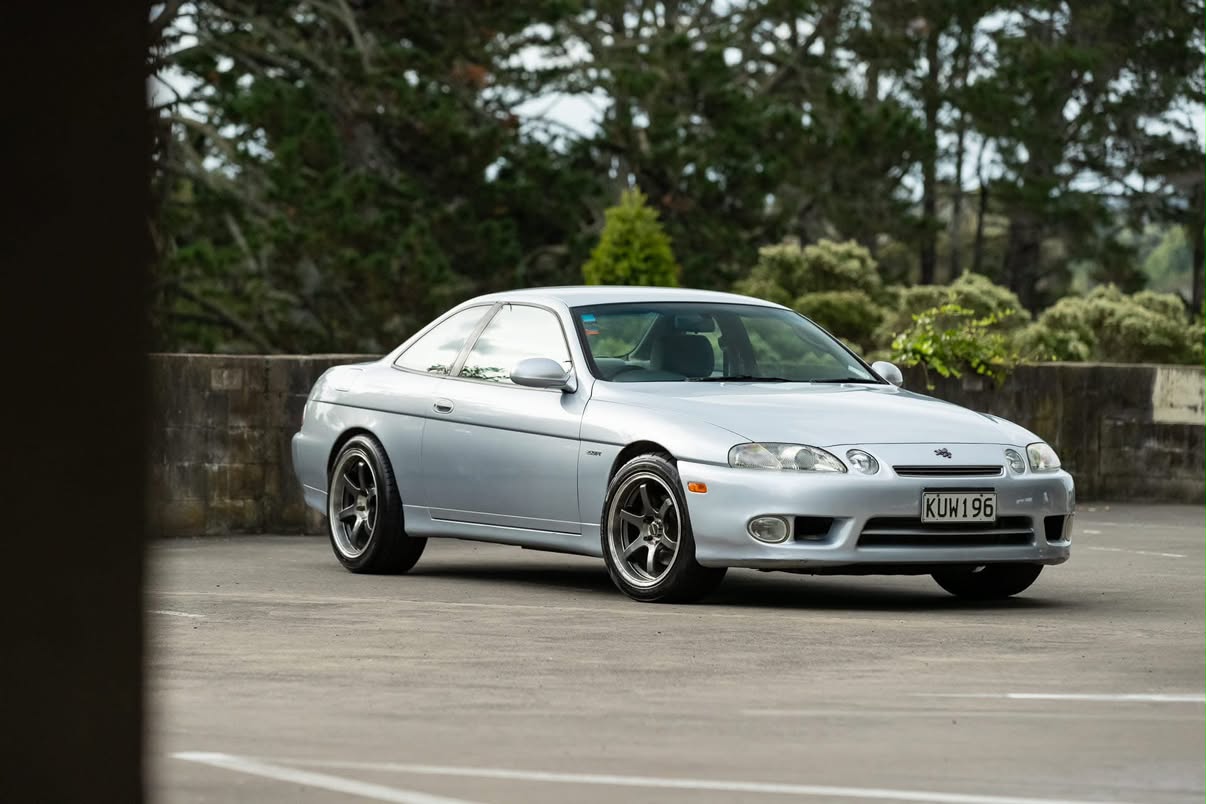
Ask Logan what NonChalant is, and he won’t start with the cars.
Ask Logan Alison to describe NonChalant Wellington and he doesn’t reach for a spec sheet. “It’s hard to describe NonChalant exactly,” he admits, “but like the name suggests, I’d say we’re pretty relaxed.” Relaxed enough that when he talks about what the club has actually built over the past couple of years, the first things he mentions aren’t builds, times or turbo sizes. They’re a primary school in Naenae, a fundraised voucher, and a group of people he now calls his best friends.
That’s the throughline of talking to Logan: For someone who runs one of Wellington’s most recognisable car clubs, he talks about the cars almost as an afterthought. “The cars are what brings us together,” he says, “but the people and the community are what keep us together.” It’s a line he returns to more than once, in more than one form, not because it’s a rehearsed soundbite, but because it’s genuinely how he sees it.
On paper, NonChalant Wellington is a car club: members, meets, an Instagram page, a name people in the scene already know. But spend any real time listening to Logan talk about it, and a different picture forms. A group of mates who happen to bond over cars, who’ve ended up running charity days at primary schools and fundraising with local kebab shop owners almost by accident, simply because that’s what happens when a car club stops being about the cars.
NONCHALANT WELLINGTON, AT A GLANCE
Roots: Founded in Tauranga by a founding group of around five members, including Logan, before he moved to Wellington and helped start the local chapter. Vibe: Relaxed, community-first, more about who’s involved than what they drive. Giving back: An annual visit to Naenae Primary School, backed by local business partners. Key partners: Abduhllah and Ahmad, club members and owners of Babylon Kebabs and Habibi Kebabs. Run by: Logan Alison, though he’ll be the first to say it’s not a one man show.
From Tauranga to the capital.
Logan’s connection to cars didn’t start with the meet scene, it started with his dad. “My dad is a mechanic and used to race cars, so I’ve pretty much always been around cars,” he says. Family friends were heavily into the same world, so it was simply background noise growing up, something that was always around him rather than something he chased. He didn’t properly get into cars himself, he says, until he was a bit older.
When he did, it became something more than a hobby. “Cars became a bit of an escape for me.” Logan says, echoing what he reckons is true for a lot of people in the community. “It’s something I could focus on, enjoy and switch off from everything else.” It’s a small admission, but an important one. Long before NonChalant existed as a club, cars were already doing the job the club does now.
The meet scene itself came through Instagram. Logan started meeting people online, turning up to different meets, getting steadily more involved, and that’s how he crossed paths with the people who’d become the foundation of NonChalant. What most people in Wellington’s scene don’t realize is that the club didn’t start here at all. “Not many people know this, but NonChalant was actually started in Tauranga,” Logan says. “I was one of the original five or so members.” He never pictured himself as a car club guy, but time spent around the original Tauranga crew changed his mind about what a club could actually be.
When Logan moved down to Wellington, he found a handful of like minded people who shared the same vision he’d picked up in Tauranga. Rather than start from scratch, they borrowed from the original. “We decided to take from the original NonChalant in Tauranga and build something of our own down here,” he says. “That’s how NonChalant Wellington was born.” There was no single launch moment, just as Logan puts it, a gradual process of building the club, both internally with members and externally with the wider community.
It’s an unusual way for a car club to come together, not built from a blank page, but carried down from another city and reshaped to fit a new one. Logan didn’t set out to run a chapter of anything. He set out to find people in Wellington who understood the same thing the Tauranga crew had shown him, that a club could be about more than cars parked in it. The name traveled south with him. Everything the name would come to mean in Wellington, he and the small founding group had to build from scratch.
Walk into most conversations about Wellington’s car meet scene and you’ll end up talking about cars. Who’s running what, who’s building what, which car park is quiet enough this week. NonChalant Wellington will happily talk about cars too. But sit down with Logan Alison, the guy most of the club looks to when something needs organising, and the conversation drifts somewhere else almost immediately: friendship, community, a primary school in Naenae, and what it actually means to be the person other people rely on. This is that conversation.
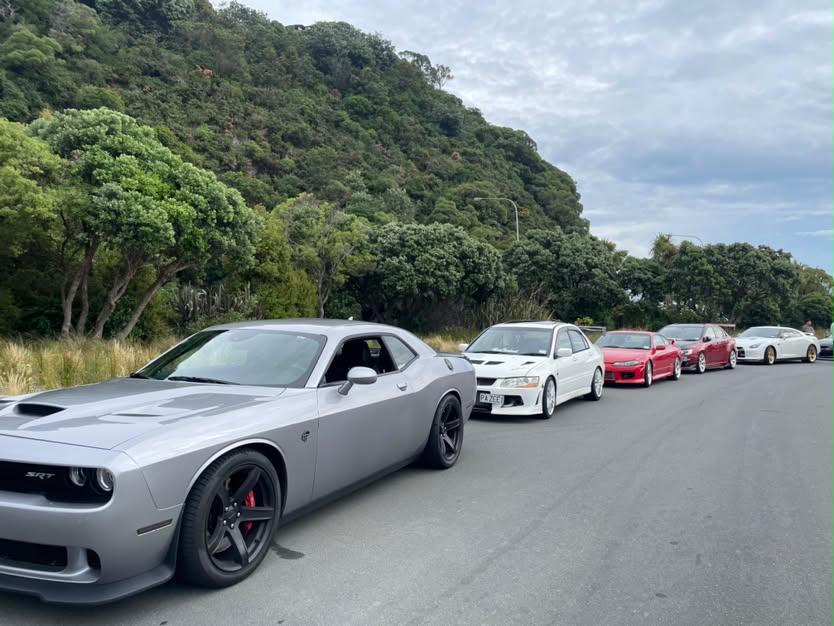
Inside NonChalant Wellington, where a car club built almost by accident is proof that community was always the real modification.
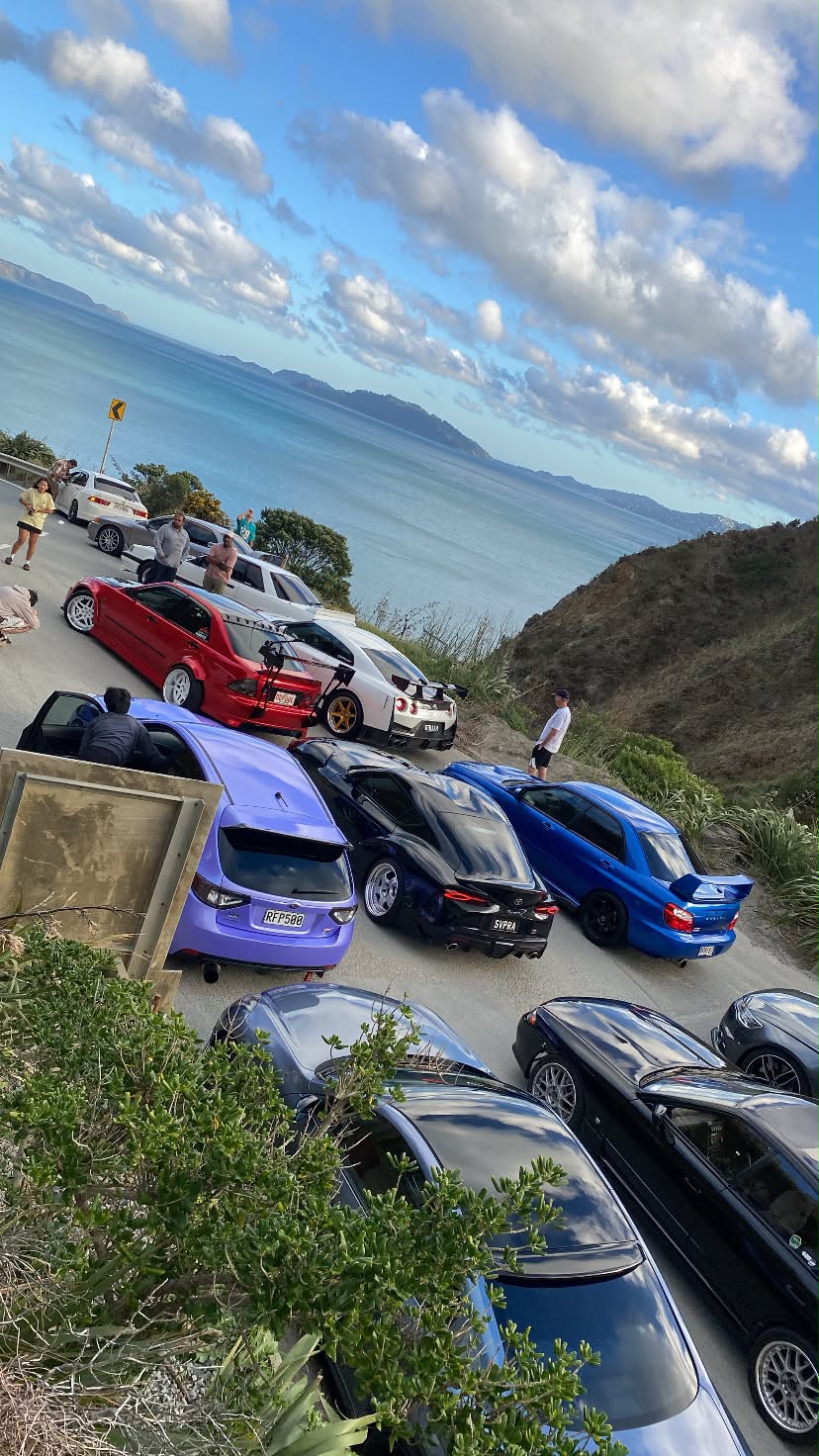

It’s not even about the meets anymore.
02 - NonChalant Wellington

And underneath it all runs a fight that’s easy to miss from the outside, not for tolerance, but for legitimacy. For being seen as something more than a stereotype. For the same recognition other passions get without having to ask for it.
I’ve spent enough nights in car parks around this city to know non of this happens by accident. Every story in this first issue is about someone who built something because nothing else fit, and kept building it, week after week, mostly without anyone saying thank you.
Issue 01 is for you. Not because you need it explained to you, but because you deserve to see it told properly, for once.
This isn’t a boy racer story. It’s the story of people trying to prove that word wrong.

Why this issue exist.
Wellington’s car meet and cruise culture doesn’t run on chance. It runs on people who looked at what already existed, decided it wasn’t enough, and built something themselves anyways. A crew, a cruise, a petition, a page. What’s rarely told is what that actually costs them: the doubt before anyone shows up, the pressure of being the one others look to, the parts of holding it all together that nobody else sees.
01 - EDITOR’S LETTER
INSIDE THIS ISSUE


← BACK TO ARTICLES
WELLINGTON, NZ
More than
just meets.
Our debut issue looks past the builds and into the culture behind them.
The meets, the community, and the people who make Wellington's car scene what it is.
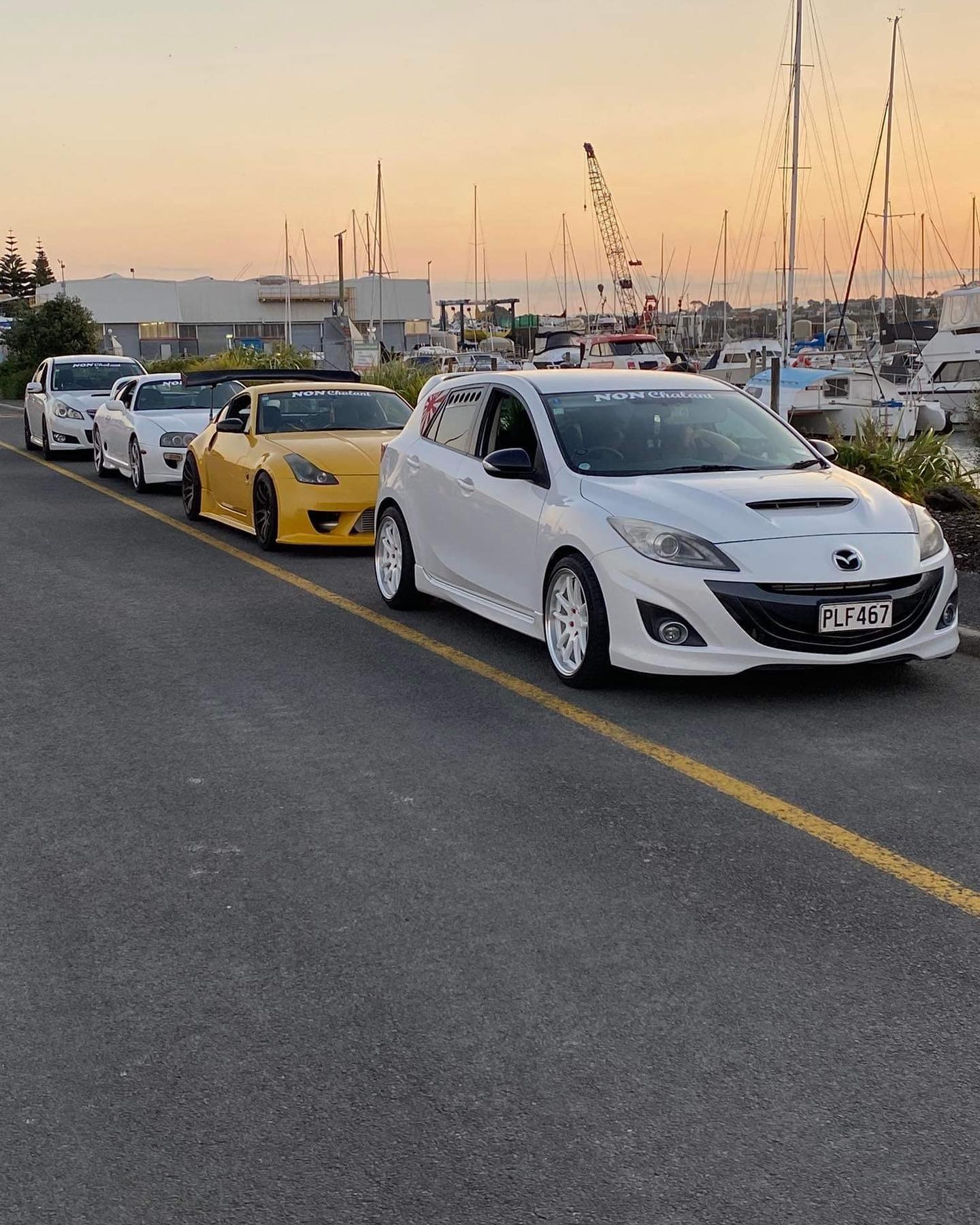
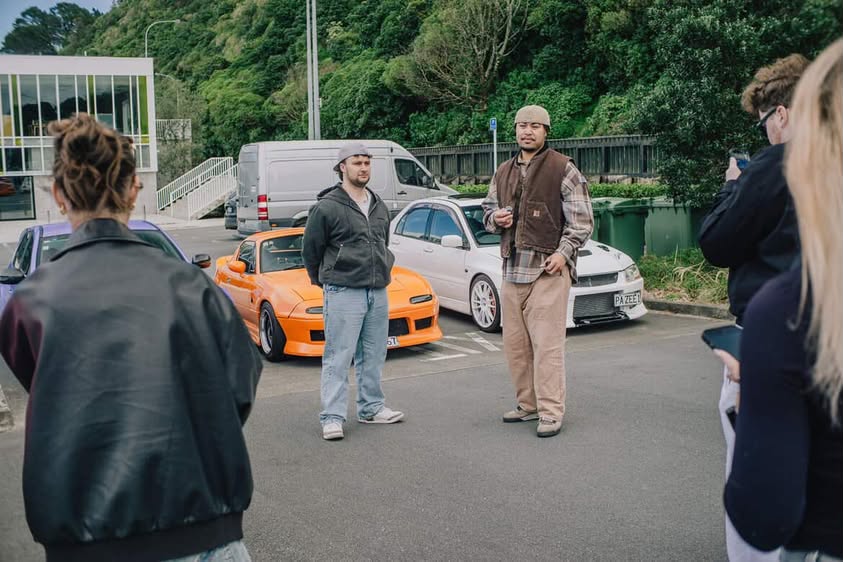
“The cars bring us together, the people keep us here.”
So what actually changed Logan’s mind, sitting around with the Tauranga crew? Not the horsepower. “Definitely the people and the community,” he says. “It didn't feel like what yo’u’d normally expect a car club to be, it was really just a group of friends with a shared interest in cars.” A lot of the best moments, he says, happened away from the cars entirely: getting food together, backyard BBQs, just hanging out. It’s a habit NonChalant Wellington has carried over heavily from its Tauranga roots.
What NonChalant actually looks like.
Pin Logan down on what NonChalant’s goals actually are, and he’ll tell you the club has already blown past whatever he originally set out to build. “That’s a tough one,” he says, “because the club has already surpassed what I originally wanted for it, and honestly, what I thought was even possible.” He’s met people and seen cars he’d never have crossed paths with otherwise, and now gets to see them regularly, or even ride and drive them himself.
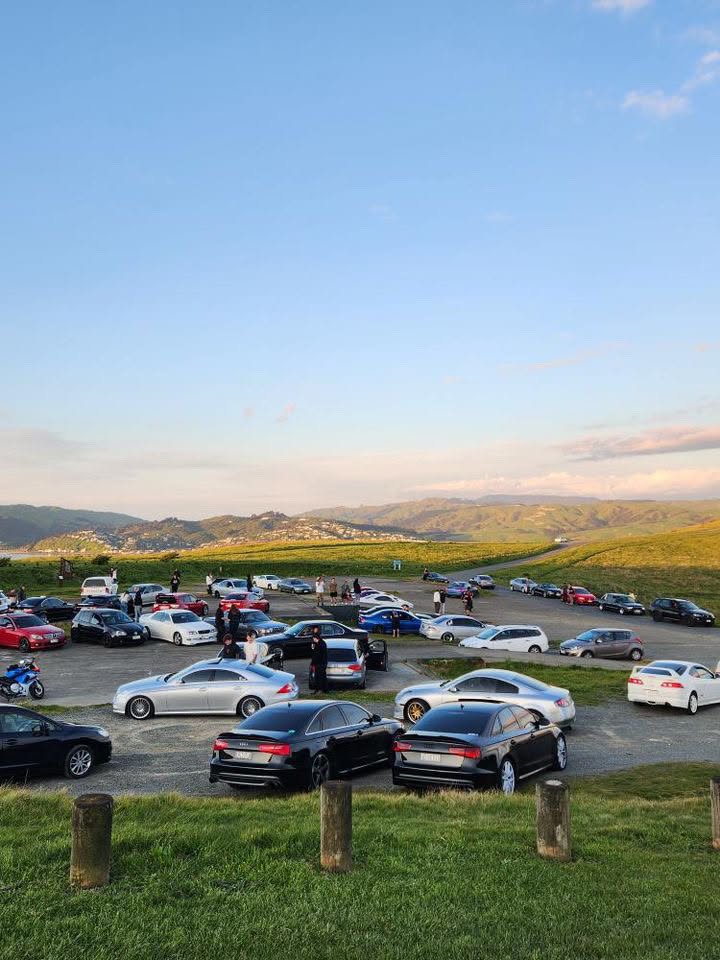
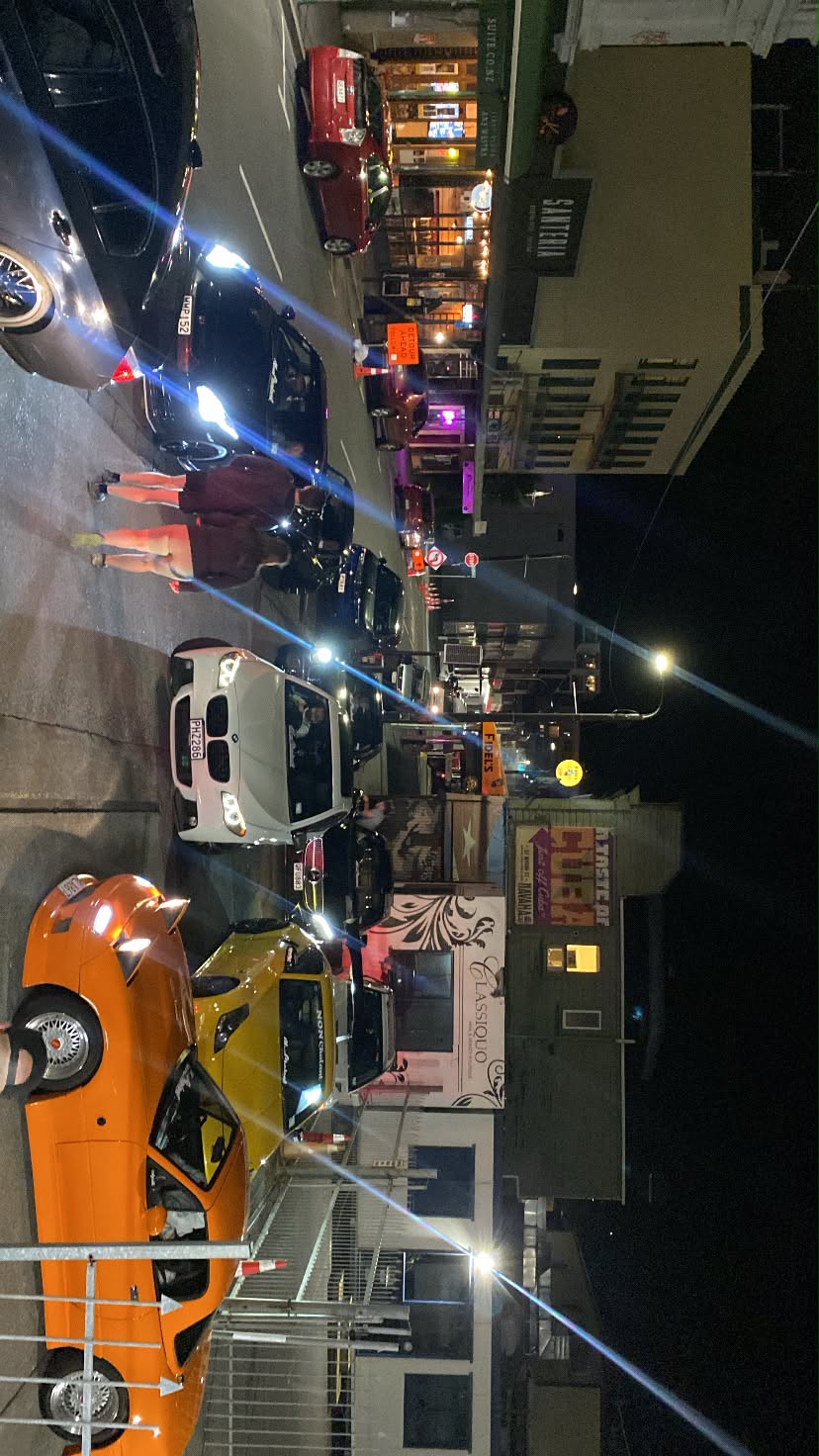
Compared to other crews in the scene, Logan reckons the real difference isn’t the cars at all, it’s everything that happens once the engines are off. Meets tend to finish with everyone heading somewhere to eat together. Birthdays get celebrated. So do housewarmings and other milestones. It’s not a formal calendar of events, just a group of people who genuinely like spending time together outside the thing that technically brought them together in the first place. “I think what makes NonChalant different,” Logan says. “It’s not just about having cars together, it’s about actually having a community around them.”
The club is still young, by Logan’s own admission, which means it hasn’t had a huge amount of time to develop deep set traditions. Most car clubs measure themselves in builds and meet turnouts, NonChalant seems more interested in measuring itself by who turns up to the birthday, the housewarming, the dinner after the meet has already wrapped up. It’s a slower, less photogenic way to build a reputation. Nobody’s posting a group dinner the way they’d post a line up shot, but it’s clearly the metric that matters most to the person running the club
And one tradition in particular is already forming, and it’s not a car event at all.
Ask Logan what actually keeps him showing up, meet after meet, and his answer barely mentions meets at all. “It’s not even about the meets anymore,” he says. “The people who were once complete strangers are now people I’m lucky to call good friends. Although they all have great cars, they’re even better people.” There’s also a role he never expected to end up in. “I’m also in a bit of a funny position where a lot of them look back at me for direction and what’s happening next.” he says. “That’s a big part of what keeps me coming back and putting things together. I enjoy seeing everyone having a good time and knowing that what we’re building means something to them. At the end of the day, I do it for the people.”


The cars are what bring us together, but the people and the community are what keep us together.
The Naenae primary story.
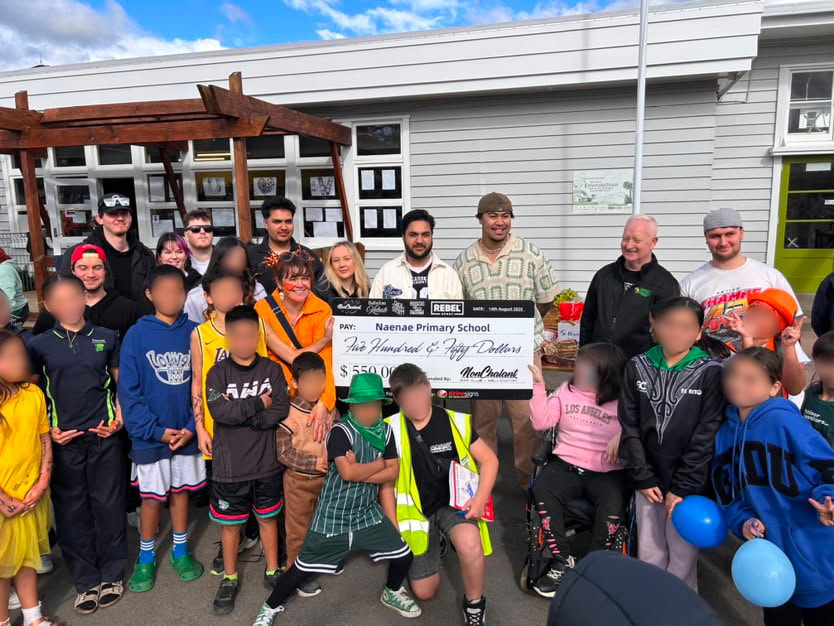
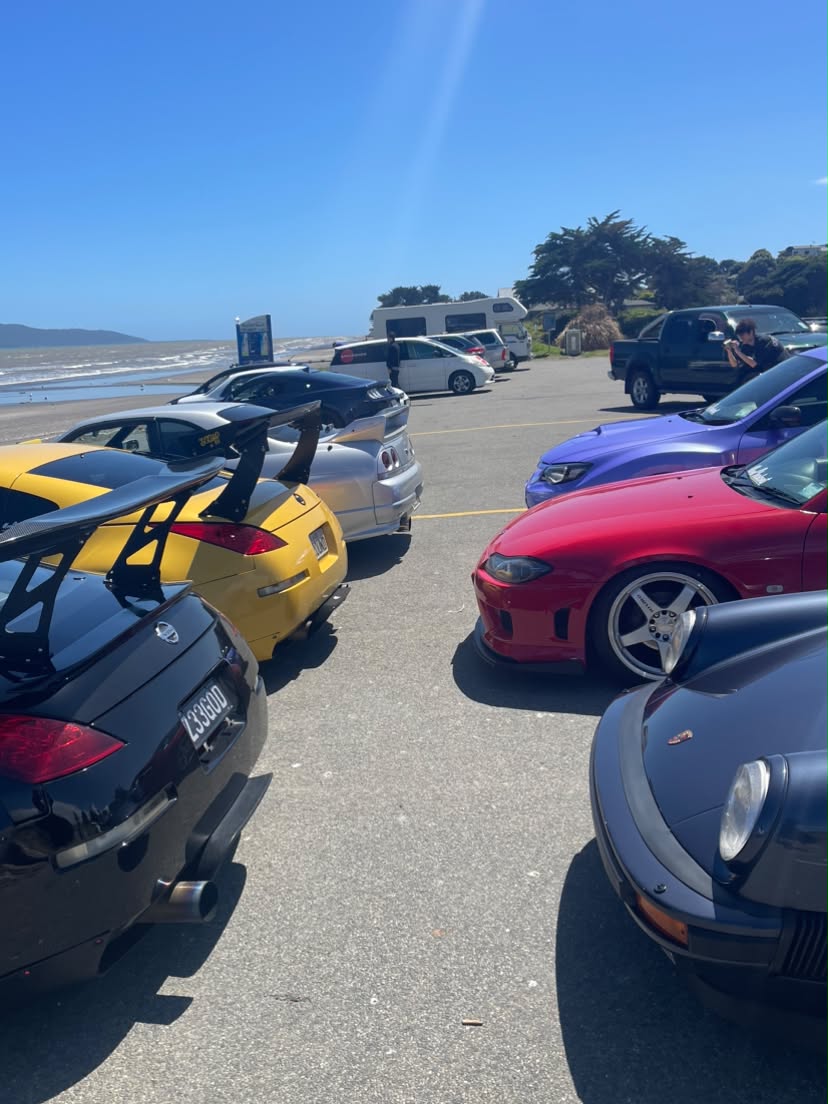
Once a year, NonChalant Wellington rolls up to Naenae Primary School. Not to show off, but to let a school full of kids climb into the cars, sit behind the wheel, and lean on every horn in the car park. “The kids come out of their classes and get to check out all the cars, sit in them, and of course, they absolutely love honking all the horns,” Logan says. “It’s really cool seeing how excited they get.”
The partnership started through one of NonChalant’s own members, whose family had an existing connection to the school. What began as a one off has become something the club is actively trying to protect and repeat. This year’s visit marks the second year running, and Logan is already talking about it as something NonChalant does every year from here on out.
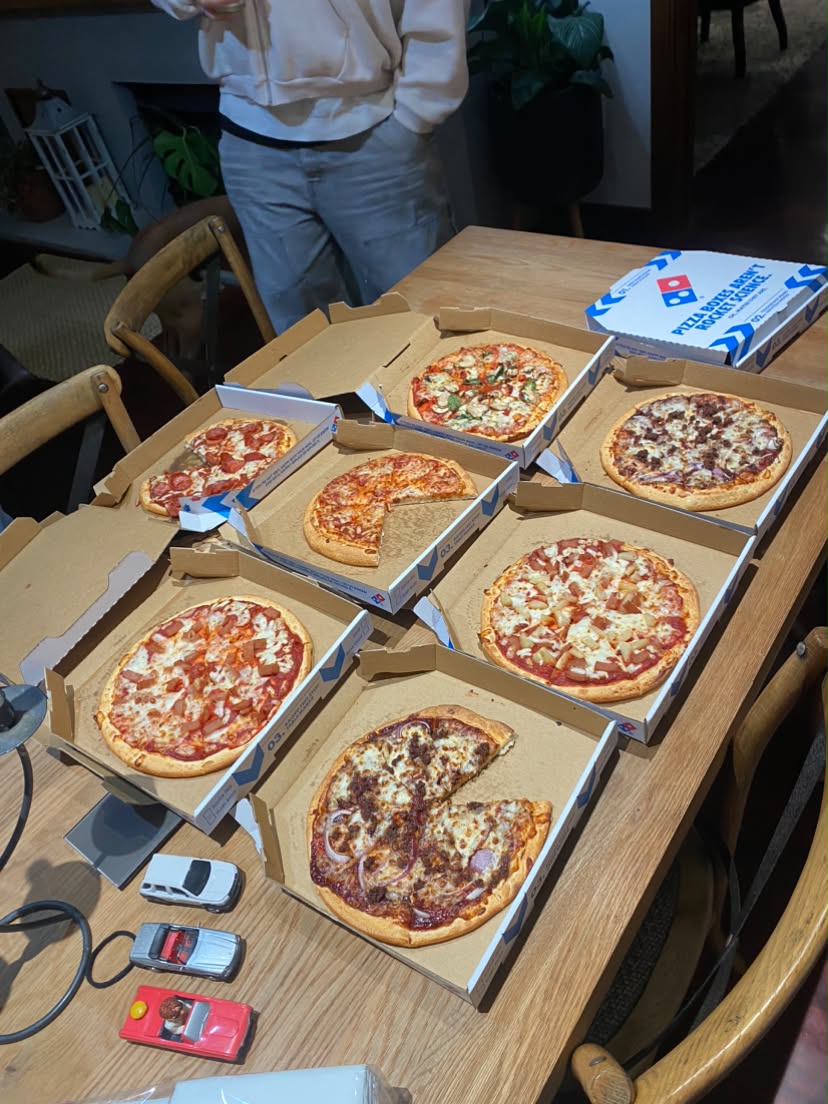
For Logan personally, that first visit to Naenae Primary changed something. “I think that day is also where a lot of the community side of NonChalant really started for me,” he says. “It opened my eyes to giving back. I never really thought I was in a position to do anything that could genuinely make a difference, but seeing the impact it had on the kids completely changed my perspective.” Last year, the club fundraised a $550 Rebel Sports voucher for the school, with partners chipping in vouchers and donated pizzas on top.
Two brothers and a kebab shop.
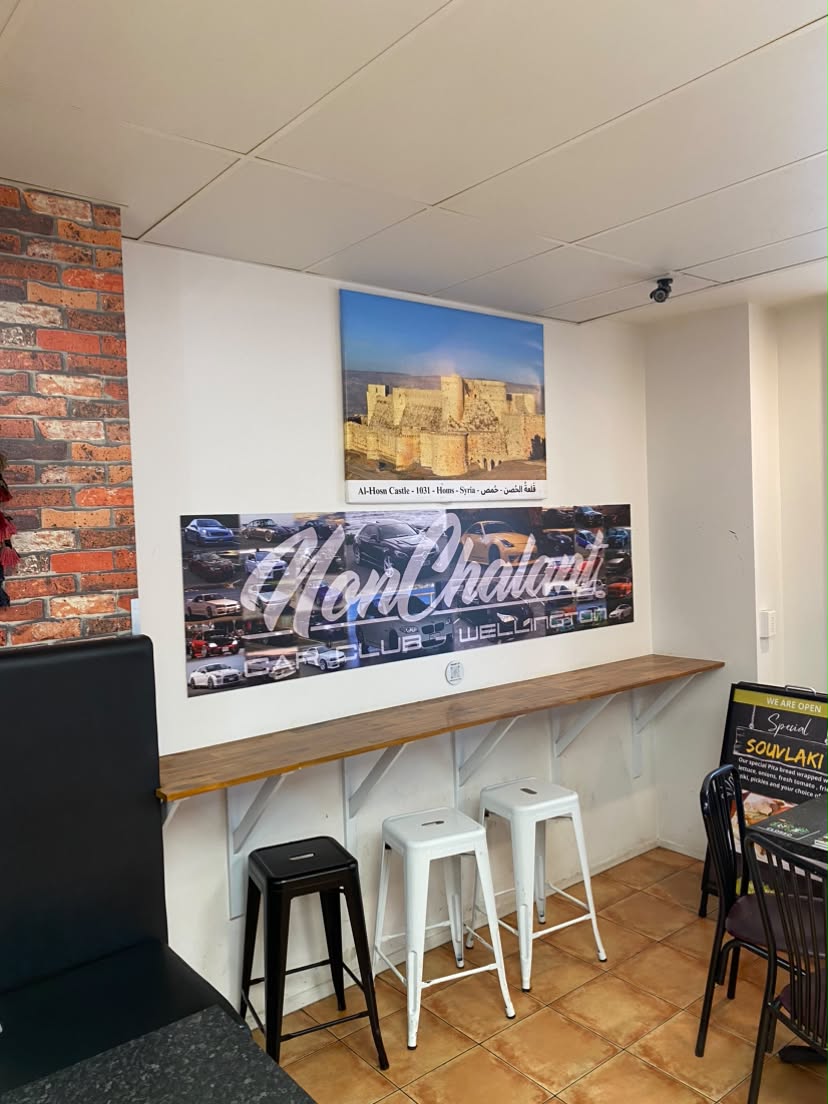
None of this, the school visits, the vouchers, the pizzas, happens in isolation. Logan is quick to credit the local businesses that have backed up the club, and two names come up before any others: two brothers who own Babylon Kebabs and, more recently, Habibi Kebabs
Both were NonChalant members before either restaurant existed. “They were both members of the club before they opened their first restaurant, Babylon Kebabs, and more recently, Habibi Kebabs," Logan says. As their businesses grew, so did the support for the club. But Logan is careful to frame it as something bigger than a sponsorship arrangement. “Their businesses have become a big part of the NonChalant community, but honestly, it goes beyond just business,” he says. “Anyone who knows them knows what a blessing they are to the people around them. They’re two of the warmest and most generous people I’ve ever met, and they’ve supported the club and what we're trying to do since the beginning.
To Logan, the pair represents something bigger than one partnership. They’re proof of what happens when a car club’s community starts to overlap with the wider local community around it. “They’re a perfect example of the kind of people and businesses we’re lucky to have around NonChalant,” he says. It’s a model he wants to keep building on: more relationships with more people and businesses, so the club can give back on an even bigger scale. Whether that’s donating food to schools, supporting local causes, or "helping out wherever we can.”
It’s a pattern worth noticing: NonChalant’s biggest wins so far haven’t come from within the club at all, but from relationships with people who were already members before they were partners. The brothers behind Babylon and Habibi Kebabs didn’t sign on as sponsors from the outside, they were part of the community first, and the support followed naturally from that. It’s the same logic Logan applies to almost everything the club does: get the people right, and the rest tends to follow.
The people behind NonChalant Wellington.
The kebab shop brothers from the last section aren’t the whole story, either. Talk to Logan long enough and it becomes clear NonChalant runs on a much wider network than the name on the Instagram page suggests, one that reflects the club itself. The members come from all kinds of backgrounds and walks of life, men and women alike, held together by nothing more than a shared love of cars and the same community first mindset Logan keeps coming back to.
“There are also a lot of people and businesses behind the scenes who have played a huge part in helping NonChalant become what it is,” Logan says, and he’s quick to start naming them. Rueben Gillies is the connection that first brought the club to Naenae Primary School. “Without that connection, I'm not sure we would have ever had the opportunity to do what we’ve done there,” Logan says, “and it has since become something important to us.”
Then there’s Ryan, known on Instagram as Cult.of.Ryan, the videographer behind a lot of the footage on NonChalant’s page. “He has made so many amazing videos for us and has never expected anything in return,” Logan says. “Honestly, without Ryan and his guidance, you wouldn’t see the quality of content you see from us today.” Ryan lent the club his camera for months, taught members how to use it, filmed alongside them, and helped with editing. He’s since become a member of the club, a close friend of Logan’s. “Another person I met through cars,” as Logan puts it.
Logan is just as quick to point the camera credit elsewhere, too. “I also have to give a huge thanks to all the members who are always happy to jump on camera,” he says. “I’m not naturally someone who likes being in front of the camera, so a lot of the videos people see are only possible because of them.” He singles out a few in particular. Mason, Reuben, Elle, and Hannah, who he says are “always keen to get involved, get on camera and push me to film more with them.” As Logan puts it, “They make creating content so much easier and honestly helps bring a lot of the personality to the club you see online.”
The list keeps going. Max, from Static Graphic Solutions, is a member who’s supported the club with graphic design, stickers, merchandise and more. Sushil and Nav, brothers and club members themselves, have backed NonChalant through their family’s Taste of India businesses around Wellington. Mat, from Kenepuru Panel & Paint, handles the club’s panel and paint work, including widebody jobs plenty of other shops won’t touch. “Another absolute blessing to have around the club” Logan says. Matty, from Flipside, has consistently supported events and drinks. And well known names in the wider scene, like Legend of the Streets and WellingtonCarz, have backed up the club consistently too. “And honestly,” Logan adds, “there are many, many more. The Wellington car scene has been incredible with the support they’ve shown us and everything we’ve tried to do.”
There’s more in the works than most people realise, too. The club has quietly filmed a promotional video with Burger Fuel, expected to drop soon, on top of a growing list of video collaborations with businesses around Wellington, a small sign of how far NonChalant’s reach now extends beyond the car park.
Giving back.
Naenae Primary was where the giving back side of NonChalant started, but it isn’t where it stopped. “Giving back has also become a much bigger part of what NonChalant is about,” Logan says, and the list of what the club has done since keeps growing. Recently, members donated around 30 kebabs and drinks to Ronald McDonald House and brought some of their cars down for the families staying there to check out, another thing made possible, Logan notes, by Abdullah and Ahmad from Babylon and Habibi Kebabs
At their first Halloween meet, the club ran a raffle for rides in some of the members' cars and donated everything raised to I AM HOPE. They’ve made a video collecting and donating cans to KidsCan, and taking food from Babylon Kebas out to people experiencing homelessness around Wellington.
The weight of being the guy people look back to.
For all the community building, the charity work, and the easy talk of friendship, there’s a harder question sitting underneath all of it: what’s it actually like being the person everyone in the club looks to? Logan doesn’t dress up the answer. “It’s definitely not something I ever wanted,” he says. “Truthfully, I never even intended to be part of a car club, let alone run one.”
He’s honest about the weight of it, too. “It can definitely be stressful at times,” he admits. “I’m still young, and there’s no real right or wrong way to run a club like this, so knowing what the best decision is isn’t always easy. I just try to do the best I can and make decisions that I think are right for the club and its members.” There’s no playbook for running a car club that's grown into a small community organisation almost by accident, Logan is figuring it out as he goes, same as anyone would.
What makes it manageable, he says, is that he’s never actually doing it alone. “I’m also very fortunate to have good people around me who I can lean on and ask for advice when I need it,” he says. “I’m definitely not alone in running NonChalant, and I think that’s important. Every member has a voice and gets a fair say in what happens.” It’s a small but telling detail, for a club with an obvious, well liked figurehead, decision making is something Logan is determined to keep shared. “At the end of the day,” he says, “it’s their club too.”
It’s the kind of admission plenty of people running clubs, crews or pages of their own in this scene will probably recognise, the gap between how a leader looks from the outside (confident, in control, always three steps ahead) and how it actually feels on the inside (young, unsure, figuring it out one decision at a time. Logan isn’t pretending that gap doesn’t exist. He’s just decided that leaning on the people around him is a better answer than pretending he doesn’t need to.
The real modification.
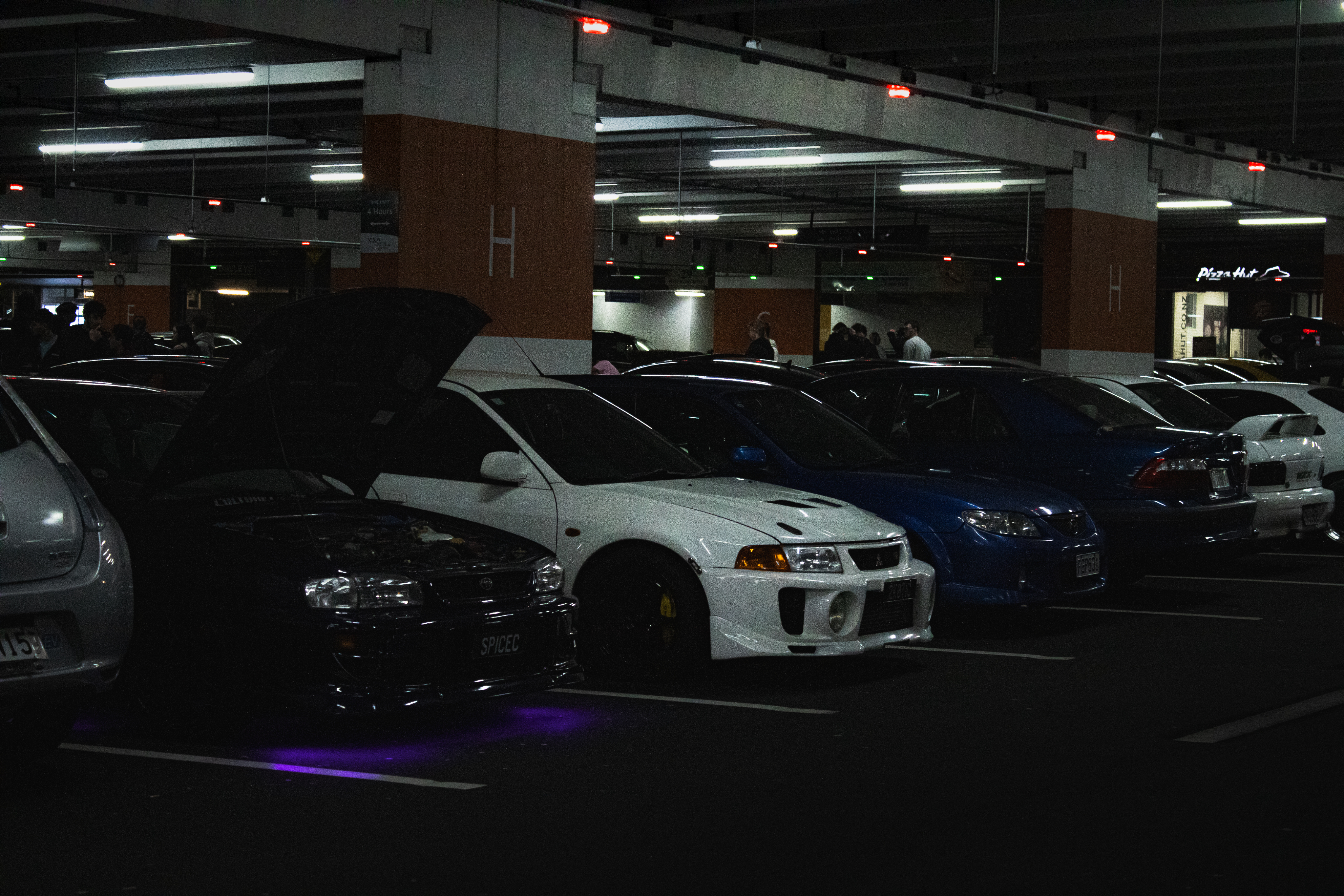
Back at Naenae Primary, the horns eventually stop, the kids head back to class, and the cars roll out one by one. It’s not the kind of scene that ends up on a car account’s highlight reels, no drift footage, no line up shots, no captions built for engagement. But it’s the moment Logan keeps coming back to when he talks about what NonChalant actually is.
Cars got these people in the same car park in the first place. Everything that’s happened since, the friendships, the fundraising, the sense of a group of strangers turning into something that looks a lot like a family, is what Logan and the rest of NonChalant Wellington actually built. The cars, it turns out, were only ever the starting point
Ask Logan what he’d want people outside the club to understand about NonChalant, and it isn't a pitch about horsepower or turnout. It’s closer to an invitation. A club that started with five people in Tauranga, carried down to Wellington by someone who never planned on running anything, now spends as much time thinking about a school fundraiser as it does the next meet location. If that sounds like an unusual way to run a car club, Logan would probably agree, and he'll probably tell you that’s exactly the point.
“These things might seem small individually,” Logan says, “but for me, they’re what the club is becoming about.” He’s careful not to overstate his own role in any of it. “There are so many people who have helped NonChalant along the way, and I don't think I could ever name everyone,” he says. “The club might have started with a few people and some cars, but what we’ve built around it is so much bigger than that.”
That question is, in a lot of ways, the closest thing NonChalant has to a mission statement. Group of people who love cars, using that shared obsession as leverage to do something for people who have nothing to do with cars at all.
There’s an obvious contrast here, and Logan doesn’t shy away from it. To most of Wellington, a car club is a night time thing, headlights, revs, a crowd gathering somewhere it probably shouldn’t. Naenae Primary is the opposite: daylight, classrooms, kids fighting over who gets to sit in the front seat. It’s not the version of NonChalant that ends up on a highlight reel, but it’s the one Logan brings up first, unprompted, whenever he’s asked what the club is actually about.
If we can use something we all love to make a positive impact on people in our local community, why wouldn’t we?
We’re lucky enough to have access to some pretty cool cars and an awesome community around us, so being able to use that to make someone else's day a little better is something I really want to keep doing.
The name behind the handle.
Ask Deeia where “1jzbaby” came from and the answer comes without hesitation. “The 1JZ is a legendary engine,” they say, “and it’s known for being a great platform to build a great car.” It’s a small detail, but it says a lot about how Deeia thinks about cars in general. Less about what rolls of the factory line, more about what it can become in the right hands. The 1JZ, a Toyota inline six best known for powering a run of 1990s JZX and Soarer-era chassis, has earned a cult following in New Zealand’s import scene precisely because of that reputation: a humble, reliable base that rewards the people willing to put the work in.
That philosophy. Solid foundations, built up over time. Could just as easily describe Deeia’s own path into car culture. There was no single spark, no one moment they could point to and say “that’s when it started.” When we asked how they got into cars, the answer was refreshingly unglamorous: “To be honest, I’m not sure. I always found cars interesting and I love them.” It wasn’t a parent’s garage or a friend’s project build that did it. Deeia can trace the interest back further than they can explain it, all the way to childhood. “I remember when I was a child I used to use a comb as a gear shifter.”
It’s a small, funny detail, but it points to something bigger about how Deeia relates to cars, not as an interest that was handed down or picked up second hand, but one they arrived at on their own terms, early and instinctively, and never really left behind.
Finding the scene.
Deeia’s first real brush with car culture came in 2016, at a drag event they stumbled into almost by accident. “Haha yeah I do,” they said when asked if they remembered it, “it was drags in 2016, I came across it by accident.” There wasn’t a mentor waiting for them there, or a single person who made the scene feel like home from day one. “Not really,” Deeia said when asked if someone had made them feel like they belonged early on. “Cars have always been an interest within myself.” The scene didn’t create the passion. It gave an already existing one somewhere to go.
What did catch Deeia off guard, once they were properly in it, was just how wide the tent turned out to be. “The difference between the interest in people's taste,” they said, thinking back on what surprised them most. “Some cars I wouldn’t have even considered to be a performance car were a big part of the scar scene.” It’s an observation a lot of newcomers eventually land on. That the meet scene was never really about a single “right” kind of car, but about the range of builds, styles and priorities that somehow all end up parked in the same carpark on a Friday night. For someone who came in expecting a narrower definition of what belonged, that variety turned out to be one of the scene’s biggest strengths.
From that first accidental night at the drags, Deeia started documenting the cars they owned and the world building up around them. They’ve been posting car content for years now, across a string of different builds, but there’s one car in particular they credit with tipping things from a casual hobby into something closer to calling: A Toyota Soarer. “I would say the Soarer is the one that really made me want to do it more,” Deeia told us. It wasn’t the first car they’d posted, but it was the one that made the posting feel worth doing properly.
What’s followed since has genuinely surprised them. Asking outright whether they expected the account to grow the way it has, Deeia’s answer was blunt: “Nope.” There was no strategy behind it, no plan to build an audience, just a consistent , honest documentation of a life spent around cars, which is arguably the only kind of growth that ever really sticks in a scene built on authenticity.
The build.
Every serious car person eventually finds the one, the car they’ve wanted for years before they actually own it, the one that feels less like a purchase and more like unfinished business finally getting sorted For Deeia, that want started with someone else’s car. “I have always wanted one ever since one of my old mates got on,” they explained. “They look, sound and feel awesome.” It’s the kind of slow burn desire that’s common in this scene. You watch a mate’s build for months, sometimes years, before the idea properly plants itself, and by the time you’re finally shopping for your own, you already know exactly what you’re looking for.
Deeia found theirs on Trade Me. “I found mine on Trade Me, bought it for $22k. It came factory manual, turbo, and was almost stock which was awesome.” For a scene where heavily modified, half finished projects are the norm, landing something close to factory condition, turbocharged, manual and largely unmolested by a previous owner’s questionable decisions, is its own kind of win. It meant Deeia got to start from a genuinely good base, rather than spending the first year of ownership undoing someone else’s mistakes.
That hasn’t made the build easy though. Ask any owner in this scene what the hardest part of a project has been, and you’ll get some sort of the same answer, and Deeia is no exception. “Money, always,” they said, without missing a beat. It’s the one constant across every build, regardless of the car, the goals, or the person behind the wrench. Parts, labour and time all cost something, and there’s rarely a shortcut around that. What’s made the difference for Deeia has been the people around them. “1000% friends when possible,” they said, “and garages when things start getting serious.” It’s a split that a lot of builds in this scene run on: mates for the smaller jobs, the late night wrenching, the moral support when something goes wrong at 11pm. And a trusted garage for the work that genuinely needs to be right, no shortcuts, no learning on the job.
There’s still more to come. When we asked what's left on the to-do list, Deeia didn’t hesitate: “Probably forging the bottom end at some point.” For anyone outside the scene, that might sound like, that might sound like a minor mechanical detail. For anyone in it, it’s a serious statement of intent. Forged internals are the kind of upgrade you make when you’re planning to push a build well beyond what the factory never intended, and when you’re confident enough in the car, and committed enough to the project, to invest in doing it properly rather than chasing quick wins.
Underneath all of it, though, the car means something that goes well past horsepower figures or resale value. “Oh man, that car is pretty much a family member,” Deeia said. “It plays a massive part in my life.” It’s not a throwaway line. Talk to enough people in this scene and you’ll hear some version of that sentiment again and again, the car as a fixture in someone’s life rather than an accessory to it, something that’s there for the good years and the expensive ones alike. For Deeia, it clearly isn’t just a project sitting in the garage to be finished. It’s already part of the family, forged internals or not.
Setting the record straight.
If there’s one thing Deeia wants people outside the scene to understand, it’s this: the public perception doesn’t match reality, “A lot of the public thinks car meets are antisocial,” they said, “but in reality it’s very social. It gets people from different backgrounds into one place. It’s more than just cars, you know.” It’s a frustration that comes up often in conversations with people inside this world. The gap between how meets look from the outside (loud, disruptive, vaguely lawless) and what’s actually happening on the ground (people from wildly different walks of life, brought together by one shared interest, mostly just talking).
Deeia is careful to draw a distinction between the scene as a whole and the handful of people who give it a bad name. “I know some people do silly stuff,” they admitted, “but that’s what happens in all sports.” It’s a comparison Deeia comes back to more than once, the idea that car culture deserves to be judged the same way any other sport or hobby is, on the actions of the community as a whole rather than the worst headline of the week. “Honestly,” they said, “I would love for the public to view us more as a sport rather than just an antisocial gathering.”
That comparison isn’t accidental. Deeia has watched the scene shift shape more than once over the years, and the swings have been dramatic. “There was a time where meets were much, much bigger and better,” they said, “but with time things got hot with the cops and the car scene slowly died down.” It’s a familiar arc for anyone who’s followed New Zealand’s meet culture over the past decade. Periods of real momentum followed by crackdowns that scatter the scene and push people further underground, sometimes for years at a time. But Deeia is optimistic about where things are heading now. “It’s getting bigger and better again,” they said. Not back to what it was overnight, but trending in the right direction, one meet at a time.
The fight for a track.
Over the past while, Deeia has become known for more than their own build. They’ve started a petition, and while most people who’ve heard about it assume it’s a push to reopen a drift track, Deeia is quick to correct the record. “Not just a drift track,” they told us. “More a motorsport facility for Wellington, because car people have nowhere to go in Welly. The reason being is because we lack a motorsport facility.”It’s a gap Deeia has felt personally for a while. “Wellington doesn’t have a motorsport facility,” they explained. “If you wanted to do anything tack related. Drifting, racing or skidding. The closet location is two hours away.” That distance isn’t a minor inconvenience. It reshapes the entire cost and logistics of the hobby. “It’s very expensive”, Deeia said. “Lots of people who drift and skid, their cars aren’t exactly road legal, so you’d have to hire a trailer or something that can get a car from here in Wellington to the track.” For a capital city, Deeia argues, the absence of anything closer is hard to justify. “Being a capital city and not having the facility is a bit backdated.”
The frustration isn’t just about convenience, it’s about how the scene is being squeezed from both directions at once, with nowhere legitimate to go and less tolerance than ever for where people currently do go instead. “There’s a lot of bullshit with the new laws,” Deeia said, “and the anti-social laws are making it hard for us to enjoy our cars.” Their argument is straightforward: give people a legitimate outlet, and they’ll use it. “If there was a place for the people, they’d 100% use it. Wellington lacks any activities.”
Deeia’s case leans on a comparison that’s hard to argue with. The city already funds recreational infrastructure for other interests, just not this one. “We have a lot of resources like mountain biking tracks that we don’t use, that the taxpayers have paid for,” they pointed out. “Personally, my goal is to get the government, the council, to build something for us.” It’s not a demand for special treatment, in Deeia’s framing, it’s a request for the same kind of consideration other recreational communities already receive.
For now, it's a campaign Deeia is running largely on their own. “This is me starting an idea,” they said, “and I do hope people will join me to help make it work.” There’s no organisation behind it yet, no formal backing, just one person who got tired of waiting for someone else to raise the issue, and decided to raise it themselves.
The economics of the sport make the case for a local facility even stronger, in Deeia’s view. Drifting, in particular, is not a cheap way to spend a weekend. “Drifting as a motorsport is one of the most expensive, I’d say,” Deeia told us, “and on top of that, there's the travel cost, which increases the price because of all the back and forth.” Every trip to the nearest track two hours away adds fuel, time and wear on top of an already costly hobby, costs that a facility closer to home would meaningfully cut down. And beyond the cost savings, Deeia sees an entertainment angle too, one Wellington currently has no way to tap into. “It’d be such a great thing to have in Wellington," they said, “because imagine the people who’d come and watch if something were to happen once a month, or once a week even.”It’s worth being clear about what Deeia is actually asking for, because the goalposts have shifted since the campaign started. An earlier option, reopening a specific existing site, is no longer on the table. “Since Slipway is out of the question now,” Deeia explained, the focus has moved to something more ambitious: working with council and government to identify a suitable Wellington location from scratch, and building a facility for drifting, racing and skids that’s actually run by the community that uses it. “Just that it's run by the people” they said, “and can generate money that goes towards the city.” It’s a pitch designed to appeal beyond the scene itself, not just a favour to car enthusiasts, but a facility that could pay its own way and put money back into Wellington.
Asked what would change day to day if the campaign succeeded, Deeia was refreshingly grounded about it. “Day to day, nothing,” they admitted, “but it gives the people a place to do it on the weekends.” No overnight transformations, no promise that the scene’s other problems would disappear, just somewhere legitimate to go when the weekend rolls around, instead of nowhere at all.
For anyone reading this who wants to help, Deeia’s ask is simple. "Right now, just sharing it, signing it, repeating it, keep talking about it, keeping it at the top," they said. "Networking it, sharing the word is a big thing, and hopefully we can attract the right people and make something work." No grand gestures required, just the same kind of word of mouth momentum that's carried the scene itself for years, pointed at a single, specific goal.
Something to show up for.
Talk to Deeia for long enough and a pattern starts to emerge, one that connects the comb as a gearstick kid, the person who stumbled into a drag meet in 2016, and the one now lobbying Wellington City Council for a motorsport facility. None of it was ever really about the cars alone. It was about somewhere to belong, people to belong with, and, increasingly, making sure that somewhere actually exists, rather than hoping it eventually turns up.
“That car is pretty much a family member,” Deeia told us early in our conversation. It’s tempting to read that as a throwaway line about one build, one Trade Me listing, one factory manual turbo bargain. But talk to Deeia about the community, about the meets, about the petition, and it becomes clear that the sentiment stretches well past the garage. The scene itself has become something like a family too. Messy, occasionally frustrating, shaped by outside pressure it can’t always control, but worth showing up for anyways, week after week, post after post, signature after signature.
Whether the petition succeeds is still an open question. But if Deeia’s account of the last decade is anything to go by, the scene has a way of finding its people and keeping them. One meet, one build and one honest answer at a time.
If you’d like to support the push for a Wellington motorsport facility, you can find and share Deeia’s petition through @deeiareviews on Instagram.
If you’ve spent any time in Wellington’s meet scene, you’ve probably seen Deeia Awad before you knew their name. Online, they go by 1jzbaby. A handle that’s grown into one of the more recognisable faces of the capital’s car culture, with a following built one meet, one post and one honest answer at a time. Off screen, Deeia is exactly who the account suggests: someone who talks about cars the way other people talk about family, because to them, that’s basically what they are.
We caught up with Deeia to talk about where it all started, what’s kept them showing up meet after meet for the better part of a decade, and the campaign they’ve recently put their name behind. A push for something Wellington hasn’t had for a while: a motorsport facility of its own.
Deeia Awad on the car that started it all, the community that keeps them coming back, and the fight to give Wellington’s scene a home of its own
More than a handle.
03 - NonChalant Wellington
Finding it alone.
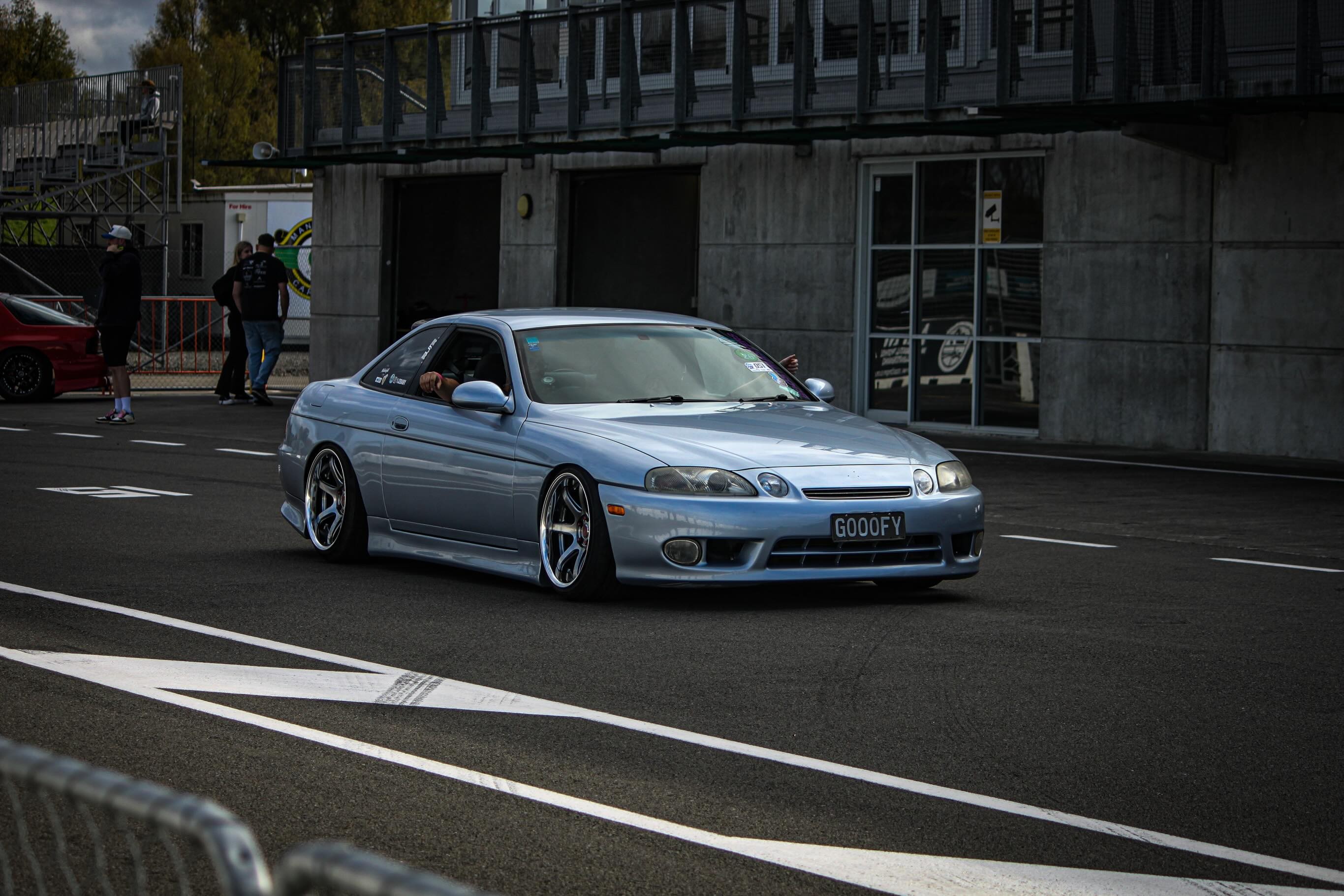
Ollie found the Wellington car scene the way a lot of people do now, through a story on Instagram. The event was at Sky Stadium, about 30 kilometres from where he lived. No car, no job, no real way of getting there. His parents handed him ten dollars for the train there and back, and that was that.
He remembers walking in nervous, not knowing anyone. It didn’t last. A few owners took the time to walk him around their builds and talk him through what they’d done. “That experience definitely stuck with me,” he says.
Behind the lens first.
Hosting wasn’t the plan. Photography was. Ollie picked up a camera and started shooting cars in 2021, at fourteen, and spent the next few years on the other side of it, turning up to meets, building relationships with owners, slowly becoming a familiar face without anyone necessarily knowing his name.Cars, in one form or another, had already been a constant his whole life. He grew up in a family full of car people, and by his own admission never really had much choice in the matter.
It wasn’t until early 2024 that hosting entered the picture, and even then it wasn’t one big spark so much as a gap he kept noticing. Legal, organized events were thin on the ground in Wellington, especially in the wake of a large illegal skid event in Levin that made the need for legitimate alternatives feel more urgent. Ollie had already tried to get something going a couple of times before, without traction. This time he just committed.
The weight of watching it work.
Ask Ollie what it actually feels like now, watching one of his meets come together, and the answer isn’t really about the cars at all. “It’s honestly an incredibly rewarding experience,” he says. “Especially recently,. Watching people come together who otherwise may never have met has been really cool to see. Knowing that I’ve helped create an environment where those friendships can happen is something I’m really proud of.”
There’s a specific moment he keeps coming back to, stepping back during a meet and taking in a few hundred people who’ve all turned up because of something he put together. “There’s something pretty surreal about seeing 400-odd people all in one place, sharing the same passion, because of something I’ve organised,” he says. He’s careful not to take full credit for it though. “I think that’s probably one of the best parts of running WellingtonCarz, seeing the community become something much bigger than I ever could have built on my own.”
Cars, or each other?
It’s a question Ollie has clearly thought about before, whether people show up for the cars or for the people standing around them. His answer lands somewhere in the middle, but leans in a particular direction. “The cars are obviously what bring people through the gates in the first place,” he says. Everyone wants to see what’s turned up, check out new builds, show off what they’ve been working on. But that’s rarely what keeps someone coming back.
“I think the people are what keep them coming back,” he says. It’s a pattern he’s watched play out meet after meet: someone arrives, spends a bit of time walking the row of cars, and then ends up standing around with their mates for most of the night, cars mostly forgotten. “I think that balance is what makes the scene so enjoyable,” he says. “The cars give everyone something in common, but the community is what makes people want to keep coming back.”
A second family.
Ollie grew up surrounded by cars, a family full of people who were into them long before he was, which he half jokes left him without much choice in the matter. That upbringing, he says, is a bit part of why WellingtonCarz exists at all.
The community he’s built now occupies a similar place in his life, and he doesn’t think that happened by accident so much as by simple repetition. “You start by coming along to meets because you're interested in cars,” he says, “but after a while you realise you’re coming back just as much to see the people.” Almost all of his closest friends today came out of the scene, people who started as strangers he met over a conversation about a car. “Honestly, almost all of the close friends I have today are people I’ve met through the car scene, which I’m incredibly grateful for,” he says. A lot of those friendships trace back to something as small as one conversation about a build at a meet, before slowly turning into something more permanent. “I think that’s one of the biggest things I’ve taken away from being involved in the scene,” he says. “The people you meet can end up meaning so much more than the cars that initially brought you together.
The part nobody sees.
For all the visible parts of hosting, the promotion, the turnout, the photos afterward. Ollie says the actual difficulty scales with the size of the event, and most people never see the gap between a casual meet and something like his Cars & Coffee gatherings. “Hosting a smaller, less formal event is actually a lot easier than people might expect,” he says. “It’s when I start putting together bigger events that things get a lot more complicated behind the scenes.”
The list of moving parts is longer than it looks: locking in a date that works for the venue, coordinating food trucks and other businesses, lining everything up with the wider event schedule, then promoting it properly. “Sometimes finding a date that works for everyone is probably the hardest part,” he says. None of it shows up in the photos from the night, but it’s the reason the night happens at all. “Once the event is actually happening, though, it makes all that work worthwhile when you see everyone come together.”
A line in the sand.
Not everything has gone smoothly, and Ollie doesn’t pretend otherwise. In early 2025, a group of BMW’s turned up to one of his events at Riverbank Car Park and started revving and doing donuts in the middle of the lot. It’s the moment he points to as the one that changed how he runs things.
Since then, WellingtonCarz has enforced a strict ban on what he calls “antisocial” behaviour, a term he says he actually dislikes, but is the clearest shorthand available. He’s not against that side of car culture existing, he understands why people enjoy it. He just doesn’t think his events are the place for it. “When you’re doing donuts or driving aggressively in a busy car park, you’re potentially putting people at risk who didn’t come to the event expecting or consenting to that kind of behaviour,” he says. “I want people to be able to enjoy their cars and have a good time, but safety has to come first.”
Setting the record straight.
Outside the scene, Ollie thinks the biggest misunderstanding is simple: that being a car enthusiast and being a “skid enthusiast” are basically the same thing. “There’s actually a pretty broad range of interest and culture within the scene,” he says. The problem, as he sees it, is less the behaviour itself and more who ends up representing the whole community in people’s minds. “That can sometimes make things difficult, particularly when the actions of a small group of people are used to represent the entire community,” he says. “Most of the enthusiasts I know are simply passionate about their cars, meeting other people and being part of the community.”
He’s noticed that the gap is closing recently on both sides. “I think that understanding has improved a lot recently,” he says. “There’s a lot more respect between different sides of the scene now,” room for all of it, provided everyone respects the space they share.
That improvement extends to how the scene gets treated externally, too. For a long time, Ollie felt Wellington's meet culture didn't get a fair shake, even at legal, organised events, police would sometimes turn up on reports of “antisocial” behaviour, despite those events existing specifically to give enthusiasts a safe, legal outlet. He understands the caution given the reputation parts of the scene have carried, but wants people to separate the actions of a few from the community as a whole. The last six months, though, have felt different. “There's been a better understanding from police and the wider public that events like WellingtonCarz are actually trying to do the opposite,” he says, “trying to create organised, legal spaces for people to enjoy their cars and socialise.”
Rethinking “boy racer” culture.
Ollie is upfront about how much his own views have shifted since he started hosting. “Coming into the scene, I probably viewed that side of it as pretty terrible,” he says of boy racer culture, “but getting more involved and actually meeting a lot of the people within it has completely changed my perspective.” What he found wasn't as different from his own world as he'd assumed. “We're actually a lot more similar than I initially thought,” he says. “We're all passionate about cars, we all enjoy modifying them and making them our own, and we all enjoy being around other people who share that passion. We might just enjoy the scene in different ways.”
That reassessment has limits, he's still not on board with the more disruptive, “invasion” style side of things. But for the more casual end of it, his position has settled: respectful, not disturbing anyone else, and not putting people at risk who never signed up to be part of it. “I think being involved in the scene has taught me that it's much easier to understand people when you actually take the time to meet them,” he says, “rather than judging them from the outside.”
Working alongside NonChalant
WellingtonCarz's name gets mentioned alongside NonChalant often enough that people assume one backs the other formally. Ollie is quick to correct that. The relationship predates the crew itself. He knew a number of NonChalant's core members through photoshoots and mutual friends before they came together as a group. “From the beginning, they've shown themselves to be a very community-focused group,” he says.
What's grown out of that is closer to a partnership than a sponsorship. “I wouldn't really describe myself as someone who simply ‘supports’ NonChalant, we work alongside each other,” he says. The two remain separate, with their own identities, but the overlap in what each is trying to achieve means they collaborate where it makes sense. Ollie's respect for the group extends past the scene itself, by his own account.
Legends of the Streets is the other name Ollie brings up unprompted. The two started hosting around a similar time, and in the early days Legends' events were noticeably more polished than his own, he credits them with inspiration, advice and support that helped get WellingtonCarz to where it is now. What draws him to both groups is the same thing: neither seems interested in existing purely for the sake of having a name attached to events. “I've tried to take what I've learned and develop it into something that feels uniquely WellingtonCarz.”
Working alongside NonChalant
WellingtonCarz's name gets mentioned alongside NonChalant often enough that people assume one backs the other formally. Ollie is quick to correct that. The relationship predates the crew itself. He knew a number of NonChalant's core members through photoshoots and mutual friends before they came together as a group. “From the beginning, they've shown themselves to be a very community-focused group,” he says.
What's grown out of that is closer to a partnership than a sponsorship. “I wouldn't really describe myself as someone who simply ‘supports’ NonChalant, we work alongside each other,” he says. The two remain separate, with their own identities, but the overlap in what each is trying to achieve means they collaborate where it makes sense. Ollie's respect for the group extends past the scene itself, by his own account.
Legends of the Streets is the other name Ollie brings up unprompted. The two started hosting around a similar time, and in the early days Legends' events were noticeably more polished than his own, he credits them with inspiration, advice and support that helped get WellingtonCarz to where it is now. What draws him to both groups is the same thing: neither seems interested in existing purely for the sake of having a name attached to events. “I've tried to take what I've learned and develop it into something that feels uniquely WellingtonCarz.”
How much has changed.
The most obvious shift since Ollie started is scale. “When I first started, I was lucky to have around 15 cars at an event, so seeing hundreds of people turn up now is still pretty surreal,” he says. What he's more proud of, though, is what hasn't changed alongside the growth, the same kindness and openness from the earliest, smallest events is still there at meets ten times the size.
One shift he's actively pleased about is who's showing up. Increasingly, it's not just young enthusiasts on their own. “I'm seeing more people bringing their kids along, which I think is awesome,” he says. “It shows that the scene can be something that people of all ages can enjoy together, rather than it being exclusively for young car enthusiasts.” Watching WellingtonCarz grow from a handful of cars in a mostly empty car park into something whole families and friend groups turn up to is, in his words, one of the things he's most proud of.
Still the same kid.
For all the growth, Ollie doesn't think hosting has changed who he is, just how he sees the world around it. “I'm still the same kid who gets excited when I hear a cool car drive past,” he says. What's shifted is his read on the scene's other hosts, who he used to assume were quietly in competition with him, part of why he waited as long as he did to start hosting at all; he never saw the scene as something worth competing over.
That assumption didn't survive contact with reality. When he launched WellingtonCarz, the response from other established names was support, not friction. “I received nothing but support from the other big names in the scene,” he says, “and instead of competing with each other, there was actually a lot of collaboration and encouragement.” It reset how he thinks about space entirely. “I realised that there's more than enough room for everyone, and that when different people and groups work together, the entire scene benefits.”
Why he won’t step away.
Running events at this scale isn't without its costs, and Ollie doesn't claim otherwise. He's thought about stepping back more than once. “There have definitely been times when I've considered stepping back,” he says. “It can be a lot of work, and there are moments where you naturally question how long you can keep doing it.” But every time it comes up, the answer has landed in the same place. “Honestly, I can't imagine myself actually walking away anytime soon.”
Part of that is simply how much the community means to him now, “WellingtonCarz has become such a big part of my life, and the people I've met through it mean a lot to me.” He's not mapping out exactly where it goes, but he knows what he wants: “For as long as I'm enjoying it and the community continues to grow, I want to keep being a part of it.” “I'd love to look back years from now and know that I helped build something that people genuinely enjoyed being a part of.”
Where it goes from here.
Ollie would like to make WellingtonCarz bigger, larger, organised events, potentially in bigger venues and other parts of the country. But he's careful to frame that as a direction rather than a demand: “I'm genuinely happy with where things are right now. If the scene stayed exactly the way it is, I certainly wouldn't be complaining.” The scale isn't really the goal in his mind, the community is. “It's less about chasing numbers for the sake of it and more about continuing to build a community that people actually want to be part of.”
The change he'd most like to see sits outside his own events, in how the Wellington scene as a whole is perceived by people who've never been part of it. “The biggest thing I'd love to see is the Wellington car scene being viewed in a more positive light by the wider public,” he says. “If people saw the scene as more of a community of enthusiasts rather than focusing on the negative behaviour of a small minority, I think more people would feel comfortable getting involved, attending events and even hosting their own.” What he ultimately wants is simple: for anyone who's into cars, in whatever form that takes, to feel like there's a spot for them. “I'd love to see more people feel like they have a place in the scene, whether they're into modified cars, classics, performance cars, photography or simply enjoy being around them.”
His message to anyone reading this who's never been to a meet is close to the one he was given as a nervous fourteen-year-old at Sky Stadium. Don't overthink it. You don't need a build worth talking about, and you don't need to know a single person walking in.
It’s the same thing he now tries to build into every WellingtonCarz event, a room where showing up alone for the first time doesn’t mean staying on the outside of it.
He remembers telling himself, despite barely knowing anyone in the scene he was about to try to bring together.
Years behind the lens had already given him contacts. Car owners, other photographers, people putting on their own events around the region. “I remember thinking it would be awesome to bring all of those people and cars together in one place,” he says, “but in a way that was organised, legal and genuinely enjoyable for everyone involved.”
There’s a moment Ollie West still can’t quite get used to. Standing at the edge of one of his own meets, watching 400-odd people mill between builds that took years to finish, all there because of something he started. “I never imagined the events would reach that scale,” he says. It’s a strange thing to sit with, given the whole thing began with a $10 train fare and a kid who didn’t know a single person in the scene.
What’s followed has turned WellingtonCarz from a handful of cars in an empty park into one of the more recognisable names in Wellington’s car scene, but talk to Ollie for long enough and it’s clear the growth was never really the point. The point was always the people standing around the cars, not the cars themselves.
Ollie West spent years behind a camera before he ever hosted a meet. Now WellingtonCarz pulls hundreds of cars a night, and he says growth was never really the point
Fifteen cars to four hundred.
04 - WellingtonCarz


It showed me how welcoming the car scene can be when people are willing to take the time to bring someone new in.
There’s no better time than now.
It’s given me a second family.
We’re actually a lot more similar than I initially thought.
If you're passionate about cars or you just want to meet some good people, there's a place for you.
01 - EDITOR’S LETTER
02 - NonChalant Wellington
03 - 1jzbaby
04 - WellingtonCarz
Inside NonChalant Wellington, where a car club built almost by accident is proof that community was always the real modification.
Deeia Awad on the car that started it all, the community that keeps them coming back, and the fight to give Wellington’s scene a home of its own
Ollie West spent years behind a camera before he ever hosted a meet. Now WellingtonCarz pulls hundreds of cars a night, and he says growth was never really the point
Walk into most conversations about Wellington’s car meet scene and you’ll end up talking about cars. Who’s running what, who’s building what, which car park is quiet enough this week. NonChalant Wellington will happily talk about cars too. But sit down with Logan Alison, the guy most of the club looks to when something needs organising, and the conversation drifts somewhere else almost immediately: friendship, community, a primary school in Naenae, and what it actually means to be the person other people rely on. This is that conversation.
Ask Logan what NonChalant is, and he won’t start with the cars.Ask Logan Alison to describe NonChalant Wellington and he doesn’t reach for a spec sheet. “It’s hard to describe NonChalant exactly,” he admits, “but like the name suggests, I’d say we’re pretty relaxed.” Relaxed enough that when he talks about what the club has actually built over the past couple of years, the first things he mentions aren’t builds, times or turbo sizes. They’re a primary school in Naenae, a fundraised voucher, and a group of people he now calls his best friends.
That’s the throughline of talking to Logan: For someone who runs one of Wellington’s most recognisable car clubs, he talks about the cars almost as an afterthought. “The cars are what brings us together,” he says, “but the people and the community are what keep us together.” It’s a line he returns to more than once, in more than one form, not because it’s a rehearsed soundbite, but because it’s genuinely how he sees it.
On paper, NonChalant Wellington is a car club: members, meets, an Instagram page, a name people in the scene already know. But spend any real time listening to Logan talk about it, and a different picture forms. A group of mates who happen to bond over cars, who’ve ended up running charity days at primary schools and fundraising with local kebab shop owners almost by accident, simply because that’s what happens when a car club stops being about the cars.
NONCHALANT WELLINGTON, AT A GLANCE
Roots: Founded in Tauranga by a founding group of around five members, including Logan, before he moved to Wellington and helped start the local chapter. Vibe: Relaxed, community-first, more about who’s involved than what they drive. Giving back: An annual visit to Naenae Primary School, backed by local business partners. Key partners: Abduhllah and Ahmad, club members and owners of Babylon Kebabs and Habibi Kebabs. Run by: Logan Alison, though he’ll be the first to say it’s not a one man show.
From Tauranga to the capital.Logan’s connection to cars didn’t start with the meet scene, it started with his dad. “My dad is a mechanic and used to race cars, so I’ve pretty much always been around cars,” he says. Family friends were heavily into the same world, so it was simply background noise growing up, something that was always around him rather than something he chased. He didn’t properly get into cars himself, he says, until he was a bit older.
When he did, it became something more than a hobby. “Cars became a bit of an escape for me.” Logan says, echoing what he reckons is true for a lot of people in the community. “It’s something I could focus on, enjoy and switch off from everything else.” It’s a small admission, but an important one. Long before NonChalant existed as a club, cars were already doing the job the club does now.
The meet scene itself came through Instagram. Logan started meeting people online, turning up to different meets, getting steadily more involved, and that’s how he crossed paths with the people who’d become the foundation of NonChalant. What most people in Wellington’s scene don’t realize is that the club didn’t start here at all. “Not many people know this, but NonChalant was actually started in Tauranga,” Logan says. “I was one of the original five or so members.” He never pictured himself as a car club guy, but time spent around the original Tauranga crew changed his mind about what a club could actually be.
When Logan moved down to Wellington, he found a handful of like minded people who shared the same vision he’d picked up in Tauranga. Rather than start from scratch, they borrowed from the original. “We decided to take from the original NonChalant in Tauranga and build something of our own down here,” he says. “That’s how NonChalant Wellington was born.” There was no single launch moment, just as Logan puts it, a gradual process of building the club, both internally with members and externally with the wider community.
It’s an unusual way for a car club to come together, not built from a blank page, but carried down from another city and reshaped to fit a new one. Logan didn’t set out to run a chapter of anything. He set out to find people in Wellington who understood the same thing the Tauranga crew had shown him, that a club could be about more than cars parked in it. The name traveled south with him. Everything the name would come to mean in Wellington, he and the small founding group had to build from scratch.
“The cars bring us together, the people keep us here.”
So what actually changed Logan’s mind, sitting around with the Tauranga crew? Not the horsepower. “Definitely the people and the community,” he says. “It didn't feel like what yo’u’d normally expect a car club to be, it was really just a group of friends with a shared interest in cars.” A lot of the best moments, he says, happened away from the cars entirely: getting food together, backyard BBQs, just hanging out. It’s a habit NonChalant Wellington has carried over heavily from its Tauranga roots.
What NonChalant actually looks like.
Pin Logan down on what NonChalant’s goals actually are, and he’ll tell you the club has already blown past whatever he originally set out to build. “That’s a tough one,” he says, “because the club has already surpassed what I originally wanted for it, and honestly, what I thought was even possible.” He’s met people and seen cars he’d never have crossed paths with otherwise, and now gets to see them regularly, or even ride and drive them himself.
Compared to other crews in the scene, Logan reckons the real difference isn’t the cars at all, it’s everything that happens once the engines are off. Meets tend to finish with everyone heading somewhere to eat together. Birthdays get celebrated. So do housewarmings and other milestones. It’s not a formal calendar of events, just a group of people who genuinely like spending time together outside the thing that technically brought them together in the first place. “I think what makes NonChalant different,” Logan says. “It’s not just about having cars together, it’s about actually having a community around them.”
The club is still young, by Logan’s own admission, which means it hasn’t had a huge amount of time to develop deep set traditions. Most car clubs measure themselves in builds and meet turnouts, NonChalant seems more interested in measuring itself by who turns up to the birthday, the housewarming, the dinner after the meet has already wrapped up. It’s a slower, less photogenic way to build a reputation. Nobody’s posting a group dinner the way they’d post a line up shot, but it’s clearly the metric that matters most to the person running the club
And one tradition in particular is already forming, and it’s not a car event at all.
The Naenae primary story.
Once a year, NonChalant Wellington rolls up to Naenae Primary School. Not to show off, but to let a school full of kids climb into the cars, sit behind the wheel, and lean on every horn in the car park. “The kids come out of their classes and get to check out all the cars, sit in them, and of course, they absolutely love honking all the horns,” Logan says. “It’s really cool seeing how excited they get.”
The partnership started through one of NonChalant’s own members, whose family had an existing connection to the school. What began as a one off has become something the club is actively trying to protect and repeat. This year’s visit marks the second year running, and Logan is already talking about it as something NonChalant does every year from here on out.
For Logan personally, that first visit to Naenae Primary changed something. “I think that day is also where a lot of the community side of NonChalant really started for me,” he says. “It opened my eyes to giving back. I never really thought I was in a position to do anything that could genuinely make a difference, but seeing the impact it had on the kids completely changed my perspective.” Last year, the club fundraised a $550 Rebel Sports voucher for the school, with partners chipping in vouchers and donated pizzas on top.
Two brothers and a kebab shop.
None of this, the school visits, the vouchers, the pizzas, happens in isolation. Logan is quick to credit the local businesses that have backed up the club, and two names come up before any others: two brothers who own Babylon Kebabs and, more recently, Habibi Kebabs
Both were NonChalant members before either restaurant existed. “They were both members of the club before they opened their first restaurant, Babylon Kebabs, and more recently, Habibi Kebabs," Logan says. As their businesses grew, so did the support for the club. But Logan is careful to frame it as something bigger than a sponsorship arrangement. “Their businesses have become a big part of the NonChalant community, but honestly, it goes beyond just business,” he says. “Anyone who knows them knows what a blessing they are to the people around them. They’re two of the warmest and most generous people I’ve ever met, and they’ve supported the club and what we're trying to do since the beginning.
To Logan, the pair represents something bigger than one partnership. They’re proof of what happens when a car club’s community starts to overlap with the wider local community around it. “They’re a perfect example of the kind of people and businesses we’re lucky to have around NonChalant,” he says. It’s a model he wants to keep building on: more relationships with more people and businesses, so the club can give back on an even bigger scale. Whether that’s donating food to schools, supporting local causes, or "helping out wherever we can.”
It’s a pattern worth noticing: NonChalant’s biggest wins so far haven’t come from within the club at all, but from relationships with people who were already members before they were partners. The brothers behind Babylon and Habibi Kebabs didn’t sign on as sponsors from the outside, they were part of the community first, and the support followed naturally from that. It’s the same logic Logan applies to almost everything the club does: get the people right, and the rest tends to follow.
It’s the same thing he now tries to build into every WellingtonCarz event, a room where showing up alone for the first time doesn’t mean staying on the outside of it.
He remembers telling himself, despite barely knowing anyone in the scene he was about to try to bring together.
Years behind the lens had already given him contacts. Car owners, other photographers, people putting on their own events around the region. “I remember thinking it would be awesome to bring all of those people and cars together in one place,” he says, “but in a way that was organised, legal and genuinely enjoyable for everyone involved.”
There’s a moment Ollie West still can’t quite get used to. Standing at the edge of one of his own meets, watching 400-odd people mill between builds that took years to finish, all there because of something he started. “I never imagined the events would reach that scale,” he says. It’s a strange thing to sit with, given the whole thing began with a $10 train fare and a kid who didn’t know a single person in the scene.
What’s followed has turned WellingtonCarz from a handful of cars in an empty park into one of the more recognisable names in Wellington’s car scene, but talk to Ollie for long enough and it’s clear the growth was never really the point. The point was always the people standing around the cars, not the cars themselves.
If you’ve spent any time in Wellington’s meet scene, you’ve probably seen Deeia Awad before you knew their name. Online, they go by 1jzbaby. A handle that’s grown into one of the more recognisable faces of the capital’s car culture, with a following built one meet, one post and one honest answer at a time. Off screen, Deeia is exactly who the account suggests: someone who talks about cars the way other people talk about family, because to them, that’s basically what they are.
We caught up with Deeia to talk about where it all started, what’s kept them showing up meet after meet for the better part of a decade, and the campaign they’ve recently put their name behind. A push for something Wellington hasn’t had for a while: a motorsport facility of its own.
Ask Logan what actually keeps him showing up, meet after meet, and his answer barely mentions meets at all. “It’s not even about the meets anymore,” he says. “The people who were once complete strangers are now people I’m lucky to call good friends. Although they all have great cars, they’re even better people.” There’s also a role he never expected to end up in. “I’m also in a bit of a funny position where a lot of them look back at me for direction and what’s happening next.” he says. “That’s a big part of what keeps me coming back and putting things together. I enjoy seeing everyone having a good time and knowing that what we’re building means something to them. At the end of the day, I do it for the people.”
That question is, in a lot of ways, the closest thing NonChalant has to a mission statement. Group of people who love cars, using that shared obsession as leverage to do something for people who have nothing to do with cars at all.
There’s an obvious contrast here, and Logan doesn’t shy away from it. To most of Wellington, a car club is a night time thing, headlights, revs, a crowd gathering somewhere it probably shouldn’t. Naenae Primary is the opposite: daylight, classrooms, kids fighting over who gets to sit in the front seat. It’s not the version of NonChalant that ends up on a highlight reel, but it’s the one Logan brings up first, unprompted, whenever he’s asked what the club is actually about.
The people behind NonChalant Wellington.
The kebab shop brothers from the last section aren’t the whole story, either. Talk to Logan long enough and it becomes clear NonChalant runs on a much wider network than the name on the Instagram page suggests, one that reflects the club itself. The members come from all kinds of backgrounds and walks of life, men and women alike, held together by nothing more than a shared love of cars and the same community first mindset Logan keeps coming back to.
“There are also a lot of people and businesses behind the scenes who have played a huge part in helping NonChalant become what it is,” Logan says, and he’s quick to start naming them. Rueben Gillies is the connection that first brought the club to Naenae Primary School. “Without that connection, I'm not sure we would have ever had the opportunity to do what we’ve done there,” Logan says, “and it has since become something important to us.”
Then there’s Ryan, known on Instagram as Cult.of.Ryan, the videographer behind a lot of the footage on NonChalant’s page. “He has made so many amazing videos for us and has never expected anything in return,” Logan says. “Honestly, without Ryan and his guidance, you wouldn’t see the quality of content you see from us today.” Ryan lent the club his camera for months, taught members how to use it, filmed alongside them, and helped with editing. He’s since become a member of the club, a close friend of Logan’s. “Another person I met through cars,” as Logan puts it.
Logan is just as quick to point the camera credit elsewhere, too. “I also have to give a huge thanks to all the members who are always happy to jump on camera,” he says. “I’m not naturally someone who likes being in front of the camera, so a lot of the videos people see are only possible because of them.” He singles out a few in particular. Mason, Reuben, Elle, and Hannah, who he says are “always keen to get involved, get on camera and push me to film more with them.” As Logan puts it, “They make creating content so much easier and honestly helps bring a lot of the personality to the club you see online.”
The list keeps going. Max, from Static Graphic Solutions, is a member who’s supported the club with graphic design, stickers, merchandise and more. Sushil and Nav, brothers and club members themselves, have backed NonChalant through their family’s Taste of India businesses around Wellington. Mat, from Kenepuru Panel & Paint, handles the club’s panel and paint work, including widebody jobs plenty of other shops won’t touch. “Another absolute blessing to have around the club” Logan says. Matty, from Flipside, has consistently supported events and drinks. And well known names in the wider scene, like Legend of the Streets and WellingtonCarz, have backed up the club consistently too. “And honestly,” Logan adds, “there are many, many more. The Wellington car scene has been incredible with the support they’ve shown us and everything we’ve tried to do.”
There’s more in the works than most people realise, too. The club has quietly filmed a promotional video with Burger Fuel, expected to drop soon, on top of a growing list of video collaborations with businesses around Wellington, a small sign of how far NonChalant’s reach now extends beyond the car park.
Giving back.
Naenae Primary was where the giving back side of NonChalant started, but it isn’t where it stopped. “Giving back has also become a much bigger part of what NonChalant is about,” Logan says, and the list of what the club has done since keeps growing. Recently, members donated around 30 kebabs and drinks to Ronald McDonald House and brought some of their cars down for the families staying there to check out, another thing made possible, Logan notes, by Abdullah and Ahmad from Babylon and Habibi Kebabs
At their first Halloween meet, the club ran a raffle for rides in some of the members' cars and donated everything raised to I AM HOPE. They’ve made a video collecting and donating cans to KidsCan, and taking food from Babylon Kebas out to people experiencing homelessness around Wellington.
“These things might seem small individually,” Logan says, “but for me, they’re what the club is becoming about.” He’s careful not to overstate his own role in any of it. “There are so many people who have helped NonChalant along the way, and I don't think I could ever name everyone,” he says. “The club might have started with a few people and some cars, but what we’ve built around it is so much bigger than that.”
The weight of being the guy people look back to.
For all the community building, the charity work, and the easy talk of friendship, there’s a harder question sitting underneath all of it: what’s it actually like being the person everyone in the club looks to? Logan doesn’t dress up the answer. “It’s definitely not something I ever wanted,” he says. “Truthfully, I never even intended to be part of a car club, let alone run one.”
He’s honest about the weight of it, too. “It can definitely be stressful at times,” he admits. “I’m still young, and there’s no real right or wrong way to run a club like this, so knowing what the best decision is isn’t always easy. I just try to do the best I can and make decisions that I think are right for the club and its members.” There’s no playbook for running a car club that's grown into a small community organisation almost by accident, Logan is figuring it out as he goes, same as anyone would.
What makes it manageable, he says, is that he’s never actually doing it alone. “I’m also very fortunate to have good people around me who I can lean on and ask for advice when I need it,” he says. “I’m definitely not alone in running NonChalant, and I think that’s important. Every member has a voice and gets a fair say in what happens.” It’s a small but telling detail, for a club with an obvious, well liked figurehead, decision making is something Logan is determined to keep shared. “At the end of the day,” he says, “it’s their club too.”
It’s the kind of admission plenty of people running clubs, crews or pages of their own in this scene will probably recognise, the gap between how a leader looks from the outside (confident, in control, always three steps ahead) and how it actually feels on the inside (young, unsure, figuring it out one decision at a time. Logan isn’t pretending that gap doesn’t exist. He’s just decided that leaning on the people around him is a better answer than pretending he doesn’t need to.
What’s next.NonChalant Wellington isn’t chasing a bigger Instagram following or a louder reputation in the scene. If anything, Logan’s version of success looks a lot like doing more of exactly what they’re already doing: growing the community, deepening relationships with the people and businesses who’ve backed them, and finding more ways to give back, whether that’s another year at Naenae Primary, a new local cause, or just showing up for whoever needs it.
What’s notable is what’s absent from that list. There’s no mention of chasing bigger builds, faster times, or a louder name in the scene. For a club that started with five mats in Tauranga and grew into something Logan admits has already surpassed what he thought was possible, the plan for the future looks a lot like the plan that got them here: show up for each other, and see who else you can bring along.
That’s not to say there’s no ambition here, a club that’s gone from five mates in Tauranga to a recognised name in Wellington's scene, with real community partnerships and growing charity presence, clearly isn’t standing still. It’s just that Logan measures the club’s growth differently to how most of the scene measures it. Not by how many people show up to a meet, but by how many of those people would still show up if there were no cars involved at all.
The name behind the handle.
Ask Deeia where “1jzbaby” came from and the answer comes without hesitation. “The 1JZ is a legendary engine,” they say, “and it’s known for being a great platform to build a great car.” It’s a small detail, but it says a lot about how Deeia thinks about cars in general. Less about what rolls of the factory line, more about what it can become in the right hands. The 1JZ, a Toyota inline six best known for powering a run of 1990s JZX and Soarer-era chassis, has earned a cult following in New Zealand’s import scene precisely because of that reputation: a humble, reliable base that rewards the people willing to put the work in.
That philosophy. Solid foundations, built up over time. Could just as easily describe Deeia’s own path into car culture. There was no single spark, no one moment they could point to and say “that’s when it started.” When we asked how they got into cars, the answer was refreshingly unglamorous: “To be honest, I’m not sure. I always found cars interesting and I love them.” It wasn’t a parent’s garage or a friend’s project build that did it. Deeia can trace the interest back further than they can explain it, all the way to childhood. “I remember when I was a child I used to use a comb as a gear shifter.”
It’s a small, funny detail, but it points to something bigger about how Deeia relates to cars, not as an interest that was handed down or picked up second hand, but one they arrived at on their own terms, early and instinctively, and never really left behind.
Finding the scene.
Deeia’s first real brush with car culture came in 2016, at a drag event they stumbled into almost by accident. “Haha yeah I do,” they said when asked if they remembered it, “it was drags in 2016, I came across it by accident.” There wasn’t a mentor waiting for them there, or a single person who made the scene feel like home from day one. “Not really,” Deeia said when asked if someone had made them feel like they belonged early on. “Cars have always been an interest within myself.” The scene didn’t create the passion. It gave an already existing one somewhere to go.
What did catch Deeia off guard, once they were properly in it, was just how wide the tent turned out to be. “The difference between the interest in people's taste,” they said, thinking back on what surprised them most. “Some cars I wouldn’t have even considered to be a performance car were a big part of the scar scene.” It’s an observation a lot of newcomers eventually land on. That the meet scene was never really about a single “right” kind of car, but about the range of builds, styles and priorities that somehow all end up parked in the same carpark on a Friday night. For someone who came in expecting a narrower definition of what belonged, that variety turned out to be one of the scene’s biggest strengths.
From that first accidental night at the drags, Deeia started documenting the cars they owned and the world building up around them. They’ve been posting car content for years now, across a string of different builds, but there’s one car in particular they credit with tipping things from a casual hobby into something closer to calling: A Toyota Soarer. “I would say the Soarer is the one that really made me want to do it more,” Deeia told us. It wasn’t the first car they’d posted, but it was the one that made the posting feel worth doing properly.
What’s followed since has genuinely surprised them. Asking outright whether they expected the account to grow the way it has, Deeia’s answer was blunt: “Nope.” There was no strategy behind it, no plan to build an audience, just a consistent , honest documentation of a life spent around cars, which is arguably the only kind of growth that ever really sticks in a scene built on authenticity.
The build.
Every serious car person eventually finds the one, the car they’ve wanted for years before they actually own it, the one that feels less like a purchase and more like unfinished business finally getting sorted For Deeia, that want started with someone else’s car. “I have always wanted one ever since one of my old mates got on,” they explained. “They look, sound and feel awesome.” It’s the kind of slow burn desire that’s common in this scene. You watch a mate’s build for months, sometimes years, before the idea properly plants itself, and by the time you’re finally shopping for your own, you already know exactly what you’re looking for.
Deeia found theirs on Trade Me. “I found mine on Trade Me, bought it for $22k. It came factory manual, turbo, and was almost stock which was awesome.” For a scene where heavily modified, half finished projects are the norm, landing something close to factory condition, turbocharged, manual and largely unmolested by a previous owner’s questionable decisions, is its own kind of win. It meant Deeia got to start from a genuinely good base, rather than spending the first year of ownership undoing someone else’s mistakes.
That hasn’t made the build easy though. Ask any owner in this scene what the hardest part of a project has been, and you’ll get some sort of the same answer, and Deeia is no exception. “Money, always,” they said, without missing a beat. It’s the one constant across every build, regardless of the car, the goals, or the person behind the wrench. Parts, labour and time all cost something, and there’s rarely a shortcut around that. What’s made the difference for Deeia has been the people around them. “1000% friends when possible,” they said, “and garages when things start getting serious.” It’s a split that a lot of builds in this scene run on: mates for the smaller jobs, the late night wrenching, the moral support when something goes wrong at 11pm. And a trusted garage for the work that genuinely needs to be right, no shortcuts, no learning on the job.
There’s still more to come. When we asked what's left on the to-do list, Deeia didn’t hesitate: “Probably forging the bottom end at some point.” For anyone outside the scene, that might sound like, that might sound like a minor mechanical detail. For anyone in it, it’s a serious statement of intent. Forged internals are the kind of upgrade you make when you’re planning to push a build well beyond what the factory never intended, and when you’re confident enough in the car, and committed enough to the project, to invest in doing it properly rather than chasing quick wins.
Underneath all of it, though, the car means something that goes well past horsepower figures or resale value. “Oh man, that car is pretty much a family member,” Deeia said. “It plays a massive part in my life.” It’s not a throwaway line. Talk to enough people in this scene and you’ll hear some version of that sentiment again and again, the car as a fixture in someone’s life rather than an accessory to it, something that’s there for the good years and the expensive ones alike. For Deeia, it clearly isn’t just a project sitting in the garage to be finished. It’s already part of the family, forged internals or not.
Setting the record straight.
If there’s one thing Deeia wants people outside the scene to understand, it’s this: the public perception doesn’t match reality, “A lot of the public thinks car meets are antisocial,” they said, “but in reality it’s very social. It gets people from different backgrounds into one place. It’s more than just cars, you know.” It’s a frustration that comes up often in conversations with people inside this world. The gap between how meets look from the outside (loud, disruptive, vaguely lawless) and what’s actually happening on the ground (people from wildly different walks of life, brought together by one shared interest, mostly just talking).
Deeia is careful to draw a distinction between the scene as a whole and the handful of people who give it a bad name. “I know some people do silly stuff,” they admitted, “but that’s what happens in all sports.” It’s a comparison Deeia comes back to more than once, the idea that car culture deserves to be judged the same way any other sport or hobby is, on the actions of the community as a whole rather than the worst headline of the week. “Honestly,” they said, “I would love for the public to view us more as a sport rather than just an antisocial gathering.”
That comparison isn’t accidental. Deeia has watched the scene shift shape more than once over the years, and the swings have been dramatic. “There was a time where meets were much, much bigger and better,” they said, “but with time things got hot with the cops and the car scene slowly died down.” It’s a familiar arc for anyone who’s followed New Zealand’s meet culture over the past decade. Periods of real momentum followed by crackdowns that scatter the scene and push people further underground, sometimes for years at a time. But Deeia is optimistic about where things are heading now. “It’s getting bigger and better again,” they said. Not back to what it was overnight, but trending in the right direction, one meet at a time.
The fight for a track.
Over the past while, Deeia has become known for more than their own bui;d. They’ve started a petition, and while most people who’ve heard about it assume it’s a push to reopen a drift track, Deeia is quick to correct the record. “Not just a drift track,” they told us. “More a motorsport facility for Wellington, because car people have nowhere to go in Welly. The reason being is because we lack a motorsport facility.”It’s a gap Deeia has felt personally for a while. “Wellington doesn’t have a motorsport facility,” they explained. “If you wanted to do anything tack related. Drifting, racing or skidding. The closet location is two hours away.” That distance isn’t a minor inconvenience. It reshapes the entire cost and logistics of the hobby. “It’s very expensive”, Deeia said. “Lots of people who drift and skid, their cars aren’t exactly road legal, so you’d have to hire a trailer or something that can get a car from here in Wellington to the track.” For a capital city, Deeia argues, the absence of anything closer is hard to justify. “Being a capital city and not having the facility is a bit backdated.”
The frustration isn’t just about convenience, it’s about how the scene is being squeezed from both directions at once, with nowhere legitimate to go and less tolerance than ever for where people currently do go instead. “There’s a lot of bullshit with the new laws,” Deeia said, “and the anti-social laws are making it hard for us to enjoy our cars.” Their argument is straightforward: give people a legitimate outlet, and they’ll use it. “If there was a place for the people, they’d 100% use it. Wellington lacks any activities.”
Deeia’s case leans on a comparison that’s hard to argue with. The city already funds recreational infrastructure for other interests, just not this one. “We have a lot of resources like mountain biking tracks that we don’t use, that the taxpayers have paid for,” they pointed out. “Personally, my goal is to get the government, the council, to build something for us.” It’s not a demand for special treatment, in Deeia’s framing, it’s a request for the same kind of consideration other recreational communities already receive.
For now, it's a campaign Deeia is running largely on their own. “This is me starting an idea,” they said, “and I do hope people will join me to help make it work.” There’s no organisation behind it yet, no formal backing, just one person who got tired of waiting for someone else to raise the issue, and decided to raise it themselves.
The economics of the sport make the case for a local facility even stronger, in Deeia’s view. Drifting, in particular, is not a cheap way to spend a weekend. “Drifting as a motorsport is one of the most expensive, I’d say,” Deeia told us, “and on top of that, there's the travel cost, which increases the price because of all the back and forth.” Every trip to the nearest track two hours away adds fuel, time and wear on top of an already costly hobby, costs that a facility closer to home would meaningfully cut down. And beyond the cost savings, Deeia sees an entertainment angle too, one Wellington currently has no way to tap into. “It’d be such a great thing to have in Wellington," they said, “because imagine the people who’d come and watch if something were to happen once a month, or once a week even.”It’s worth being clear about what Deeia is actually asking for, because the goalposts have shifted since the campaign started. An earlier option, reopening a specific existing site, is no longer on the table. “Since Slipway is out of the question now,” Deeia explained, the focus has moved to something more ambitious: working with council and government to identify a suitable Wellington location from scratch, and building a facility for drifting, racing and skids that’s actually run by the community that uses it. “Just that it's run by the people” they said, “and can generate money that goes towards the city.” It’s a pitch designed to appeal beyond the scene itself, not just a favour to car enthusiasts, but a facility that could pay its own way and put money back into Wellington.
Asked what would change day to day if the campaign succeeded, Deeia was refreshingly grounded about it. “Day to day, nothing,” they admitted, “but it gives the people a place to do it on the weekends.” No overnight transformations, no promise that the scene’s other problems would disappear, just somewhere legitimate to go when the weekend rolls around, instead of nowhere at all.
For anyone reading this who wants to help, Deeia’s ask is simple. "Right now, just sharing it, signing it, repeating it, keep talking about it, keeping it at the top," they said. "Networking it, sharing the word is a big thing, and hopefully we can attract the right people and make something work." No grand gestures required, just the same kind of word of mouth momentum that's carried the scene itself for years, pointed at a single, specific goal.
Something to show up for.
Talk to Deeia for long enough and a pattern starts to emerge, one that connects the comb as a gearstick kid, the person who stumbled into a drag meet in 2016, and the one now lobbying Wellington City Council for a motorsport facility. None of it was ever really about the cars alone. It was about somewhere to belong, people to belong with, and, increasingly, making sure that somewhere actually exists, rather than hoping it eventually turns up.
“That car is pretty much a family member,” Deeia told us early in our conversation. It’s tempting to read that as a throwaway line about one build, one Trade Me listing, one factory manual turbo bargain. But talk to Deeia about the community, about the meets, about the petition, and it becomes clear that the sentiment stretches well past the garage. The scene itself has become something like a family too. Messy, occasionally frustrating, shaped by outside pressure it can’t always control, but worth showing up for anyways, week after week, post after post, signature after signature.
Whether the petition succeeds is still an open question. But if Deeia’s account of the last decade is anything to go by, the scene has a way of finding its people and keeping them. One meet, one build and one honest answer at a time.
If you’d like to support the push for a Wellington motorsport facility, you can find and share Deeia’s petition through @deeiareviews on Instagram.
Finding it alone.
Ollie found the Wellington car scene the way a lot of people do now, through a story on Instagram. The event was at Sky Stadium, about 30 kilometres from where he lived. No car, no job, no real way of getting there. His parents handed him ten dollars for the train there and back, and that was that.
He remembers walking in nervous, not knowing anyone. It didn’t last. A few owners took the time to walk him around their builds and talk him through what they’d done. “That experience definitely stuck with me,” he says.
Behind the lens first.
Hosting wasn’t the plan. Photography was. Ollie picked up a camera and started shooting cars in 2021, at fourteen, and spent the next few years on the other side of it, turning up to meets, building relationships with owners, slowly becoming a familiar face without anyone necessarily knowing his name.Cars, in one form or another, had already been a constant his whole life. He grew up in a family full of car people, and by his own admission never really had much choice in the matter.
It wasn’t until early 2024 that hosting entered the picture, and even then it wasn’t one big spark so much as a gap he kept noticing. Legal, organized events were thin on the ground in Wellington, especially in the wake of a large illegal skid event in Levin that made the need for legitimate alternatives feel more urgent. Ollie had already tried to get something going a couple of times before, without traction. This time he just committed.
The weight of watching it work.
Ask Ollie what it actually feels like now, watching one of his meets come together, and the answer isn’t really about the cars at all. “It’s honestly an incredibly rewarding experience,” he says. “Especially recently,. Watching people come together who otherwise may never have met has been really cool to see. Knowing that I’ve helped create an environment where those friendships can happen is something I’m really proud of.”
There’s a specific moment he keeps coming back to, stepping back during a meet and taking in a few hundred people who’ve all turned up because of something he put together. “There’s something pretty surreal about seeing 400-odd people all in one place, sharing the same passion, because of something I’ve organised,” he says. He’s careful not to take full credit for it though. “I think that’s probably one of the best parts of running WellingtonCarz, seeing the community become something much bigger than I ever could have built on my own.”
Cars, or each other?
It’s a question Ollie has clearly thought about before, whether people show up for the cars or for the people standing around them. His answer lands somewhere in the middle, but leans in a particular direction. “The cars are obviously what bring people through the gates in the first place,” he says. Everyone wants to see what’s turned up, check out new builds, show off what they’ve been working on. But that’s rarely what keeps someone coming back.
“I think the people are what keep them coming back,” he says. It’s a pattern he’s watched play out meet after meet: someone arrives, spends a bit of time walking the row of cars, and then ends up standing around with their mates for most of the night, cars mostly forgotten. “I think that balance is what makes the scene so enjoyable,” he says. “The cars give everyone something in common, but the community is what makes people want to keep coming back.”
A second family.
Ollie grew up surrounded by cars, a family full of people who were into them long before he was, which he half jokes left him without much choice in the matter. That upbringing, he says, is a bit part of why WellingtonCarz exists at all.
The community he’s built now occupies a similar place in his life, and he doesn’t think that happened by accident so much as by simple repetition. “You start by coming along to meets because you're interested in cars,” he says, “but after a while you realise you’re coming back just as much to see the people.” Almost all of his closest friends today came out of the scene, people who started as strangers he met over a conversation about a car. “Honestly, almost all of the close friends I have today are people I’ve met through the car scene, which I’m incredibly grateful for,” he says. A lot of those friendships trace back to something as small as one conversation about a build at a meet, before slowly turning into something more permanent. “I think that’s one of the biggest things I’ve taken away from being involved in the scene,” he says. “The people you meet can end up meaning so much more than the cars that initially brought you together.
The part nobody sees.
For all the visible parts of hosting, the promotion, the turnout, the photos afterward. Ollie says the actual difficulty scales with the size of the event, and most people never see the gap between a casual meet and something like his Cars & Coffee gatherings. “Hosting a smaller, less formal event is actually a lot easier than people might expect,” he says. “It’s when I start putting together bigger events that things get a lot more complicated behind the scenes.”
The list of moving parts is longer than it looks: locking in a date that works for the venue, coordinating food trucks and other businesses, lining everything up with the wider event schedule, then promoting it properly. “Sometimes finding a date that works for everyone is probably the hardest part,” he says. None of it shows up in the photos from the night, but it’s the reason the night happens at all. “Once the event is actually happening, though, it makes all that work worthwhile when you see everyone come together.”
A line in the sand.
Not everything has gone smoothly, and Ollie doesn’t pretend otherwise. In early 2025, a group of BMW’s turned up to one of his events at Riverbank Car Park and started revving and doing donuts in the middle of the lot. It’s the moment he points to as the one that changed how he runs things.
Since then, WellingtonCarz has enforced a strict ban on what he calls “antisocial” behaviour, a term he says he actually dislikes, but is the clearest shorthand available. He’s not against that side of car culture existing, he understands why people enjoy it. He just doesn’t think his events are the place for it. “When you’re doing donuts or driving aggressively in a busy car park, you’re potentially putting people at risk who didn’t come to the event expecting or consenting to that kind of behaviour,” he says. “I want people to be able to enjoy their cars and have a good time, but safety has to come first.”
Setting the record straight.
Outside the scene, Ollie thinks the biggest misunderstanding is simple: that being a car enthusiast and being a “skid enthusiast” are basically the same thing. “There’s actually a pretty broad range of interest and culture within the scene,” he says. The problem, as he sees it, is less the behaviour itself and more who ends up representing the whole community in people’s minds. “That can sometimes make things difficult, particularly when the actions of a small group of people are used to represent the entire community,” he says. “Most of the enthusiasts I know are simply passionate about their cars, meeting other people and being part of the community.”
He’s noticed that the gap is closing recently on both sides. “I think that understanding has improved a lot recently,” he says. “There’s a lot more respect between different sides of the scene now,” room for all of it, provided everyone respects the space they share.
That improvement extends to how the scene gets treated externally, too. For a long time, Ollie felt Wellington's meet culture didn't get a fair shake, even at legal, organised events, police would sometimes turn up on reports of “antisocial” behaviour, despite those events existing specifically to give enthusiasts a safe, legal outlet. He understands the caution given the reputation parts of the scene have carried, but wants people to separate the actions of a few from the community as a whole. The last six months, though, have felt different. “There's been a better understanding from police and the wider public that events like WELLINGTONCARZ are actually trying to do the opposite,” he says, “trying to create organised, legal spaces for people to enjoy their cars and socialise.”
Rethinking “boy racer” culture.
Ollie is upfront about how much his own views have shifted since he started hosting. “Coming into the scene, I probably viewed that side of it as pretty terrible,” he says of boy racer culture, “but getting more involved and actually meeting a lot of the people within it has completely changed my perspective.” What he found wasn't as different from his own world as he'd assumed. “We're actually a lot more similar than I initially thought,” he says. “We're all passionate about cars, we all enjoy modifying them and making them our own, and we all enjoy being around other people who share that passion. We might just enjoy the scene in different ways.”
That reassessment has limits, he's still not on board with the more disruptive, “invasion” style side of things. But for the more casual end of it, his position has settled: respectful, not disturbing anyone else, and not putting people at risk who never signed up to be part of it. “I think being involved in the scene has taught me that it's much easier to understand people when you actually take the time to meet them,” he says, “rather than judging them from the outside.”
Working alongside NonChalant.
WellingtonCarz's name gets mentioned alongside NonChalant often enough that people assume one backs the other formally. Ollie is quick to correct that. The relationship predates the crew itself. He knew a number of NonChalant's core members through photoshoots and mutual friends before they came together as a group. “From the beginning, they've shown themselves to be a very community-focused group,” he says.
What's grown out of that is closer to a partnership than a sponsorship. “I wouldn't really describe myself as someone who simply ‘supports’ NonChalant, we work alongside each other,” he says. The two remain separate, with their own identities, but the overlap in what each is trying to achieve means they collaborate where it makes sense. Ollie's respect for the group extends past the scene itself, by his own account.
Legends of the Streets is the other name Ollie brings up unprompted. The two started hosting around a similar time, and in the early days Legends' events were noticeably more polished than his own, he credits them with inspiration, advice and support that helped get WellingtonCarz to where it is now. What draws him to both groups is the same thing: neither seems interested in existing purely for the sake of having a name attached to events. “I've tried to take what I've learned and develop it into something that feels uniquely WellingtonCarz.”
How much has changed.
The most obvious shift since Ollie started is scale. “When I first started, I was lucky to have around 15 cars at an event, so seeing hundreds of people turn up now is still pretty surreal,” he says. What he's more proud of, though, is what hasn't changed alongside the growth, the same kindness and openness from the earliest, smallest events is still there at meets ten times the size.
One shift he's actively pleased about is who's showing up. Increasingly, it's not just young enthusiasts on their own. “I'm seeing more people bringing their kids along, which I think is awesome,” he says. “It shows that the scene can be something that people of all ages can enjoy together, rather than it being exclusively for young car enthusiasts.” Watching WellingtonCarz grow from a handful of cars in a mostly empty car park into something whole families and friend groups turn up to is, in his words, one of the things he's most proud of.
Still the Same Kid
For all the growth, Ollie doesn't think hosting has changed who he is, just how he sees the world around it. “I'm still the same kid who gets excited when I hear a cool car drive past,” he says. What's shifted is his read on the scene's other hosts, who he used to assume were quietly in competition with him, part of why he waited as long as he did to start hosting at all; he never saw the scene as something worth competing over.
That assumption didn't survive contact with reality. When he launched WellingtonCarz, the response from other established names was support, not friction. “I received nothing but support from the other big names in the scene,” he says, “and instead of competing with each other, there was actually a lot of collaboration and encouragement.” It reset how he thinks about space entirely. “I realised that there's more than enough room for everyone, and that when different people and groups work together, the entire scene benefits.”
Why he won’t step away.
Running events at this scale isn't without its costs, and Ollie doesn't claim otherwise. He's thought about stepping back more than once. “There have definitely been times when I've considered stepping back,” he says. “It can be a lot of work, and there are moments where you naturally question how long you can keep doing it.” But every time it comes up, the answer has landed in the same place. “Honestly, I can't imagine myself actually walking away anytime soon.”
Part of that is simply how much the community means to him now, “WellingtonCarz has become such a big part of my life, and the people I've met through it mean a lot to me.” He's not mapping out exactly where it goes, but he knows what he wants: “For as long as I'm enjoying it and the community continues to grow, I want to keep being a part of it.” “I'd love to look back years from now and know that I helped build something that people genuinely enjoyed being a part of.”
Where it goes from here.
Ollie would like to make WellingtonCarz bigger, larger, organised events, potentially in bigger venues and other parts of the country. But he's careful to frame that as a direction rather than a demand: “I'm genuinely happy with where things are right now. If the scene stayed exactly the way it is, I certainly wouldn't be complaining.” The scale isn't really the goal in his mind, the community is. “It's less about chasing numbers for the sake of it and more about continuing to build a community that people actually want to be part of.”
The change he'd most like to see sits outside his own events, in how the Wellington scene as a whole is perceived by people who've never been part of it. “The biggest thing I'd love to see is the Wellington car scene being viewed in a more positive light by the wider public,” he says. “If people saw the scene as more of a community of enthusiasts rather than focusing on the negative behaviour of a small minority, I think more people would feel comfortable getting involved, attending events and even hosting their own.” What he ultimately wants is simple: for anyone who's into cars, in whatever form that takes, to feel like there's a spot for them. “I'd love to see more people feel like they have a place in the scene, whether they're into modified cars, classics, performance cars, photography or simply enjoy being around them.”
His message to anyone reading this who's never been to a meet is close to the one he was given as a nervous fourteen-year-old at Sky Stadium. Don't overthink it. You don't need a build worth talking about, and you don't need to know a single person walking in.
The real modification.
Back at Naenae Primary, the horns eventually stop, the kids head back to class, and the cars roll out one by one. It’s not the kind of scene that ends up on a car account’s highlight reels, no drift footage, no line up shots, no captions built for engagement. But it’s the moment Logan keeps coming back to when he talks about what NonChalant actually is.
Cars got these people in the same car park in the first place. Everything that’s happened since, the friendships, the fundraising, the sense of a group of strangers turning into something that looks a lot like a family, is what Logan and the rest of NonChalant Wellington actually built. The cars, it turns out, were only ever the starting point
Ask Logan what he’d want people outside the club to understand about NonChalant, and it isn't a pitch about horsepower or turnout. It’s closer to an invitation. A club that started with five people in Tauranga, carried down to Wellington by someone who never planned on running anything, now spends as much time thinking about a school fundraiser as it does the next meet location. If that sounds like an unusual way to run a car club, Logan would probably agree, and he'll probably tell you that’s exactly the point.
And underneath it all runs a fight that’s easy to miss from the outside, not for tolerance, but for legitimacy. For being seen as something more than a stereotype. For the same recognition other passions get without having to ask for it.
I’ve spent enough nights in car parks around this city to know non of this happens by accident. Every story in this first issue is about someone who built something because nothing else fit, and kept building it, week after week, mostly without anyone saying thank you.
Issue 01 is for you. Not because you need it explained to you, but because you deserve to see it told properly, for once.
Why this issue exist.
Wellington’s car meet and cruise culture doesn’t run on chance. It runs on people who looked at what already existed, decided it wasn’t enough, and built something themselves anyways. A crew, a cruise, a petition, a page. What’s rarely told is what that actually costs them: the doubt before anyone shows up, the pressure of being the one others look to, the parts of holding it all together that nobody else sees.
It’s not even about the meets anymore.
More than a handle.
Fifteen cars to four hundred.
This isn’t a boy racer story. It’s the story of people trying to prove that word wrong.
The cars are what bring us together, but the people and the community are what keep us together.
If we can use something we all love to make a positive impact on people in our local community, why wouldn’t we?
It showed me how welcoming the car scene can be when people are willing to take the time to bring someone new in.
There’s no better time than now.
It’s given me a second family.
We’re actually a lot more similar than I initially thought.
If you're passionate about cars or you just want to meet some good people, there's a place for you.
We’re lucky enough to have access to some pretty cool cars and an awesome community around us, so being able to use that to make someone else's day a little better is something I really want to keep doing.


INSIDE THIS ISSUE


← BACK TO ARTICLES
WELLINGTON, NZ
More than
just meets.
Our debut issue looks past the builds and into the culture behind them.
The meets, the community, and the people who make Wellington's car scene
what it is.

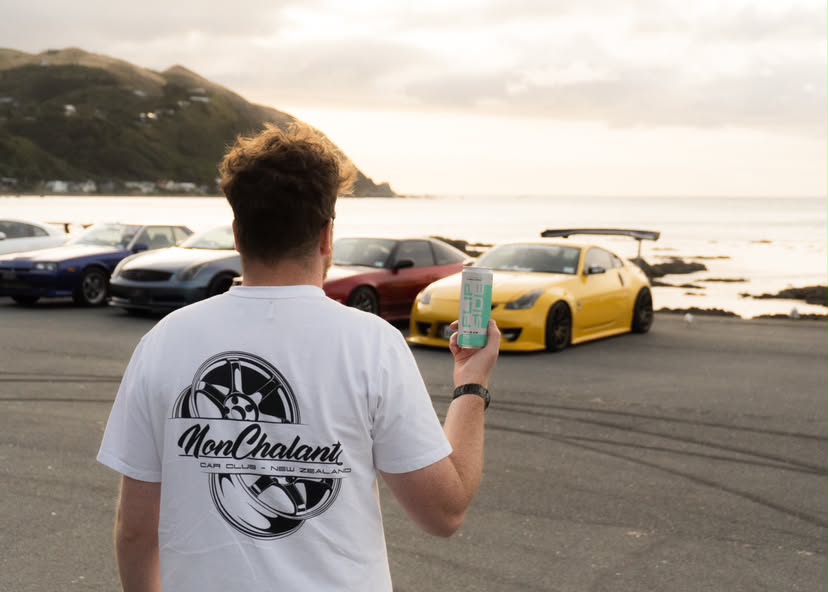
The cars are what bring us together, but the people and the community are what keep us together.